
Part of our Yaesu FTX-1 Complete Guide.
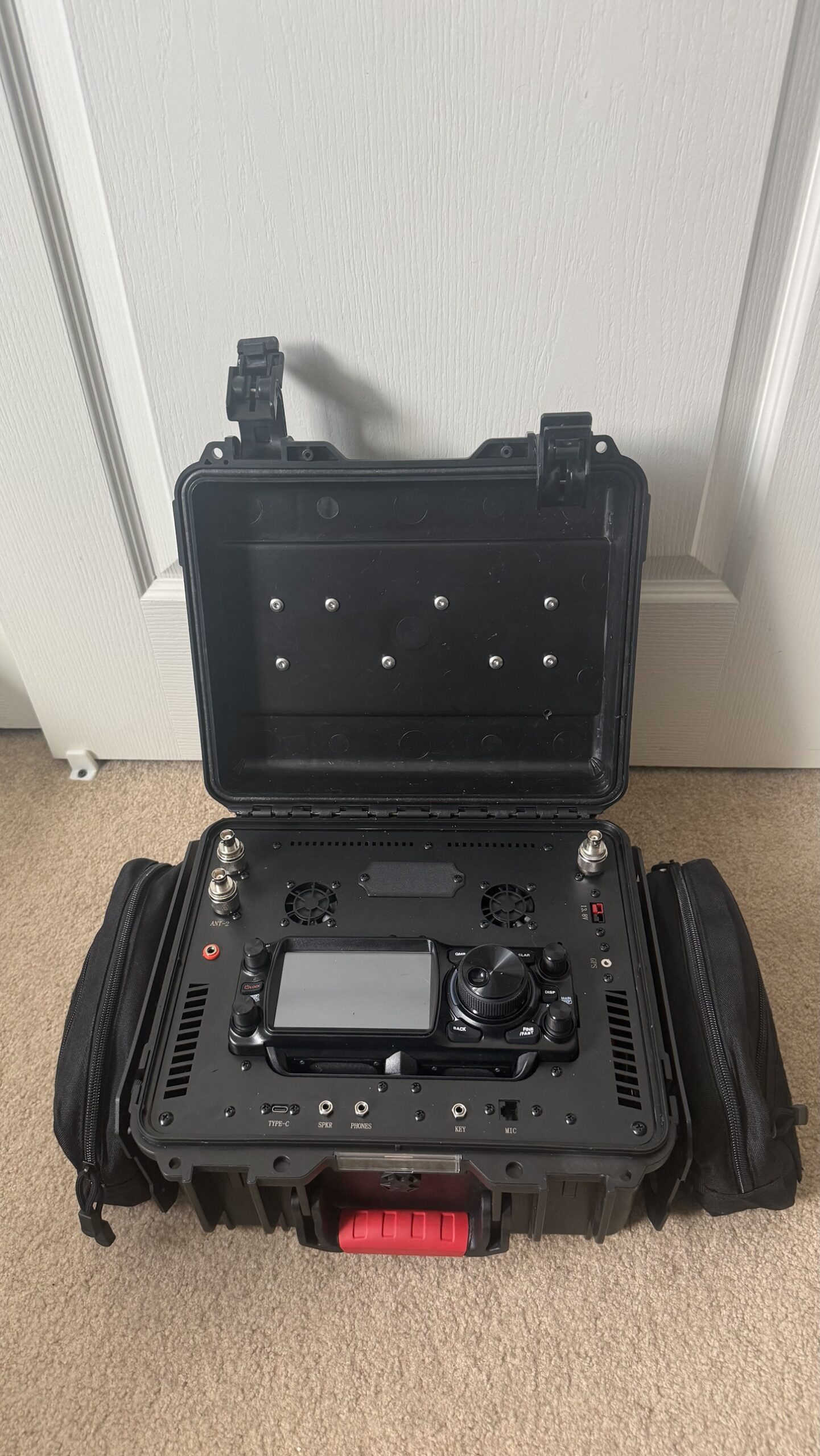
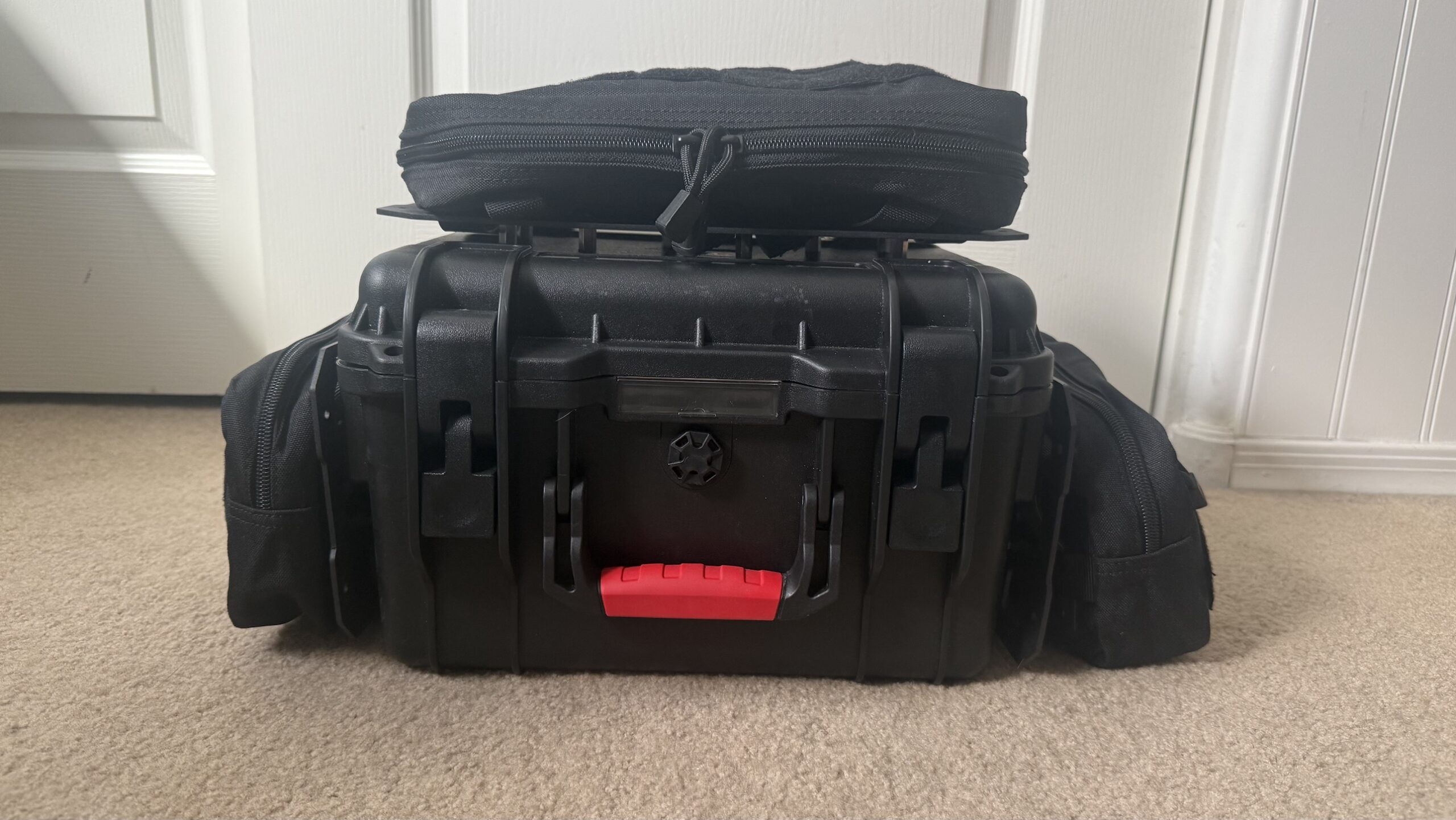
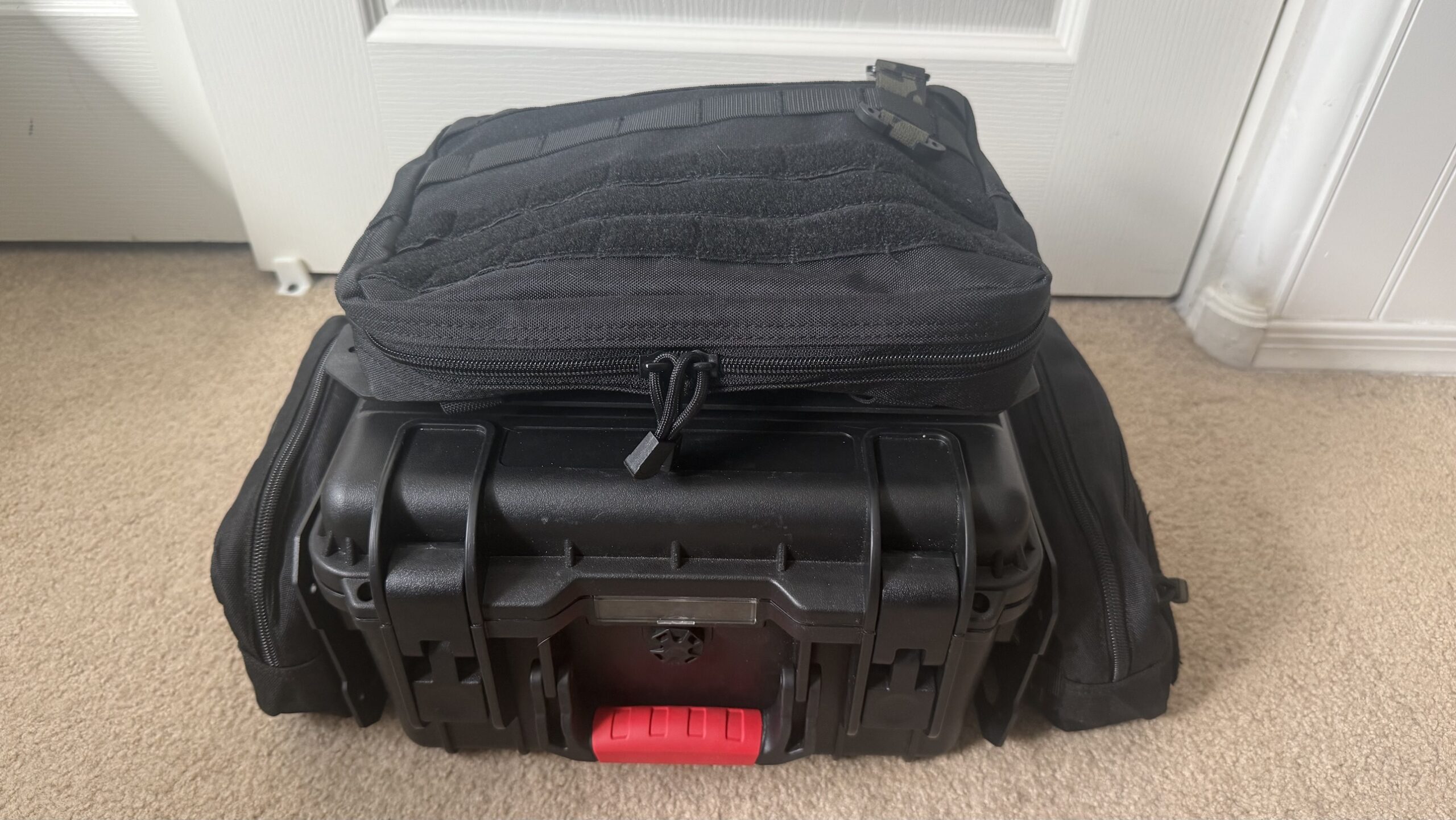
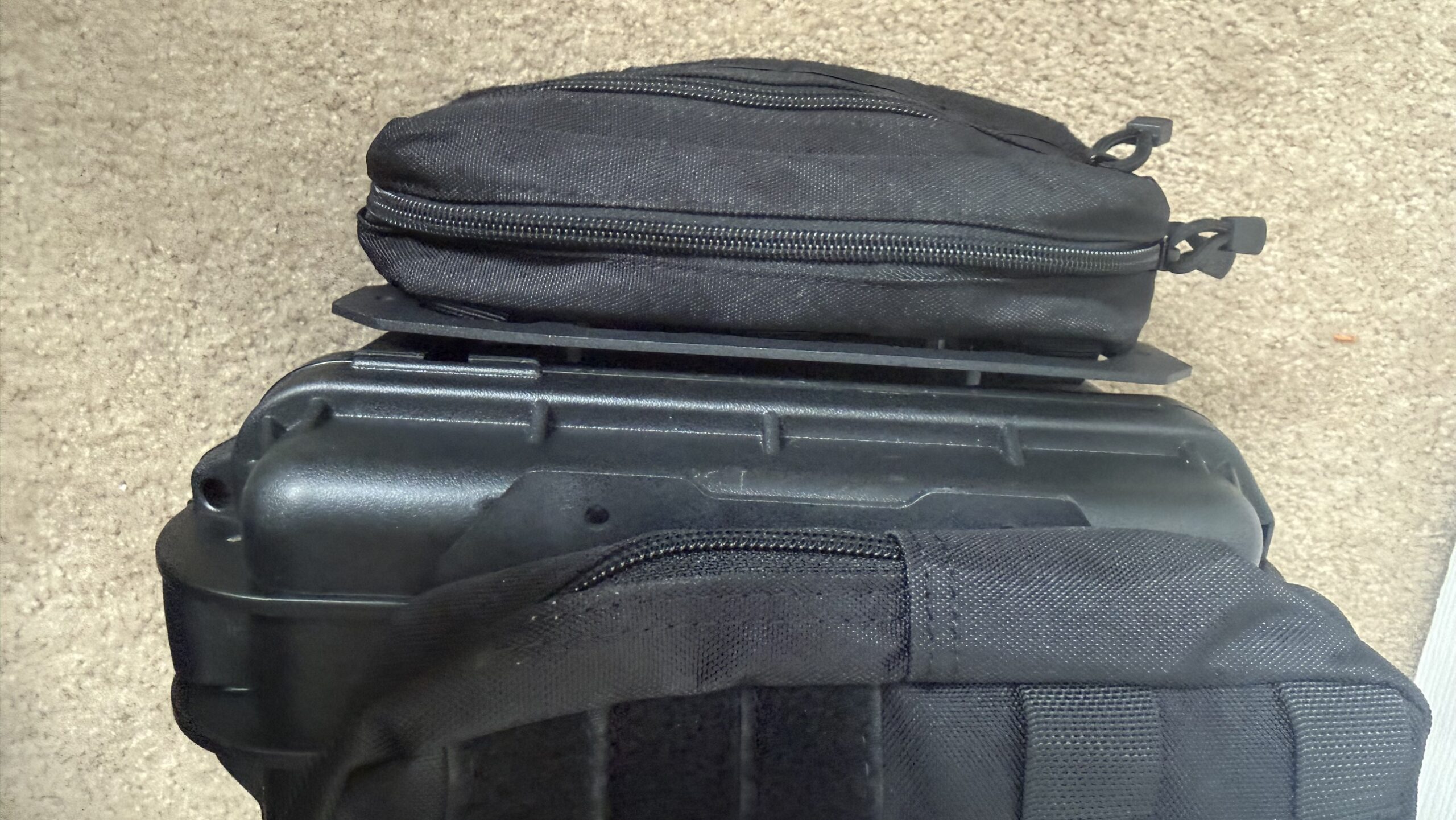
A couple of weeks ago I wrote up my Yaesu FTX-1 go-box: the FTX-1 Optima and the SPA-1 amp mounted in a watertight hard case. The case and the radio haven’t changed. What changed is everything around them. The antennas, coax, power cables, and a speaker now ride on the outside of the case in MOLLE pouches, one on the lid and one on each side.
In the original setup, the antennas and coax rode in a separate bag. That worked, but it was one more thing to remember, and anything loose can get forgotten, misplaced, or lost. They’re still in their own bags now, but those bags are attached to the box, so I can’t leave without them. I want to walk up to a spot with the radio, antennas, coax, and power all in one hand.
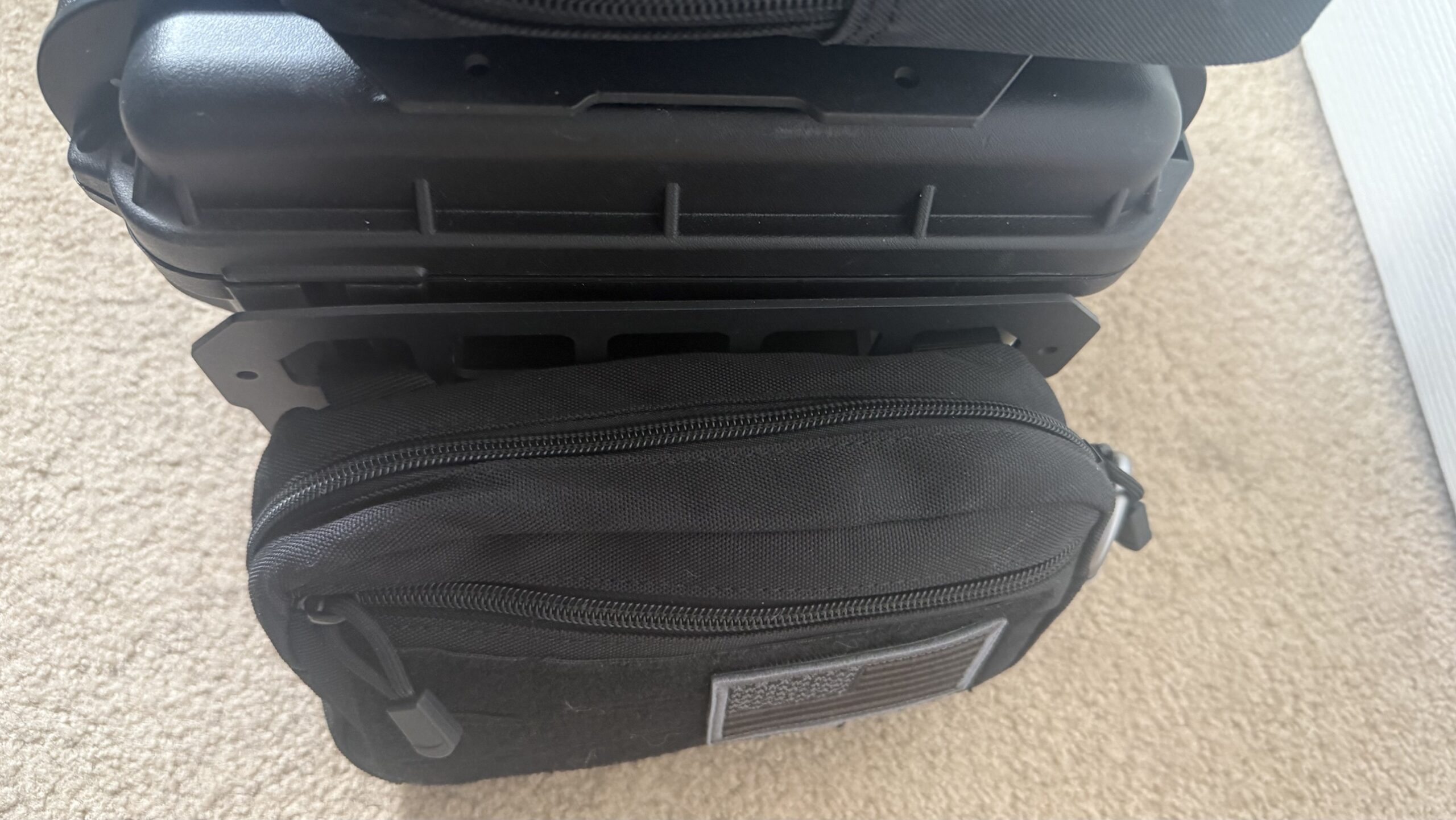
What Changed: MOLLE Panels and Pouches
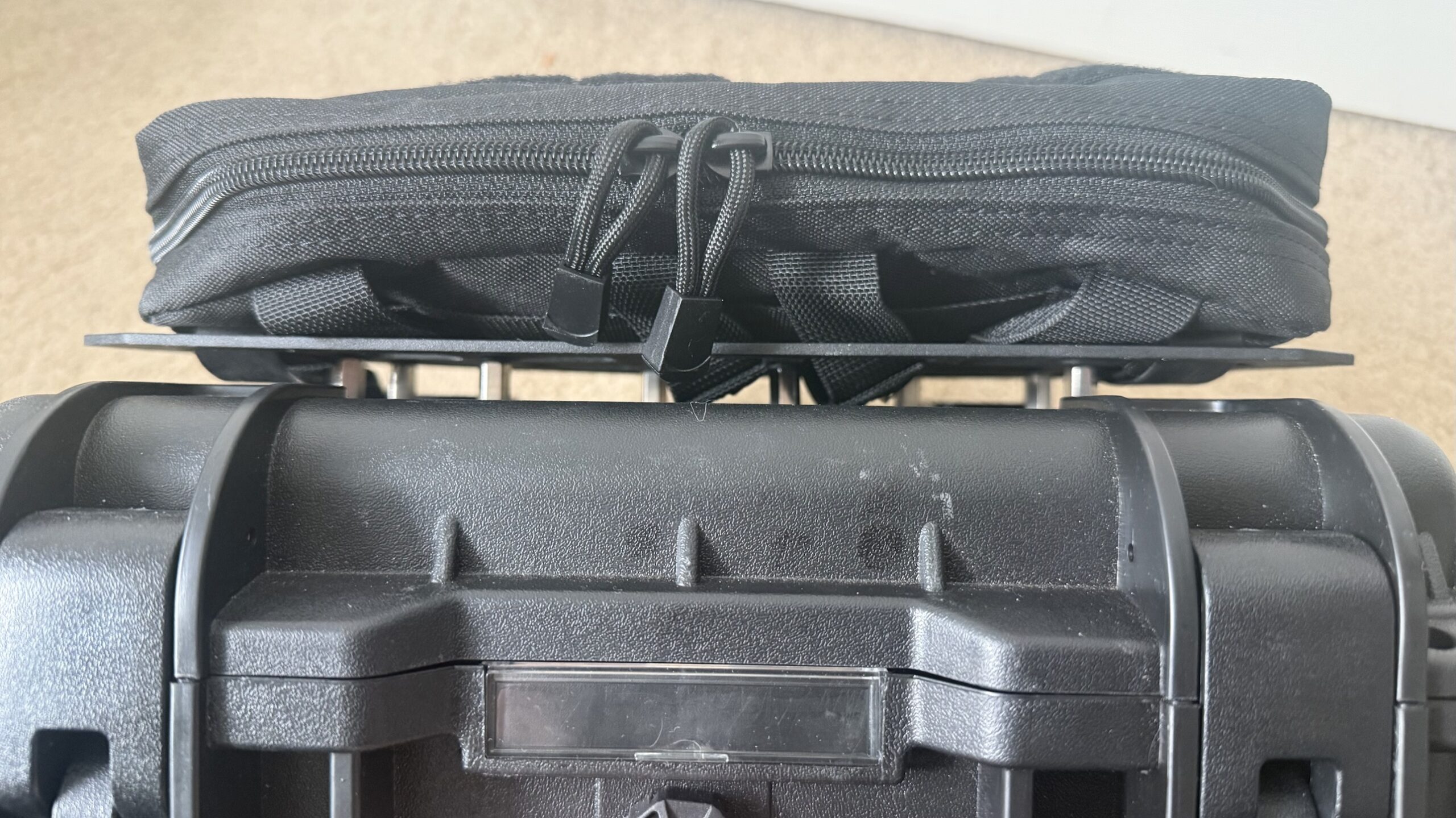
I added three MOLLE panels to the outside of the case and hung a zippered pouch on each one:
- Lid: one large MOLLE panel with this pouch on it.
- Sides: two medium MOLLE panels, one on each side, each with one of these pouches.
Why MOLLE instead of bolting pouches or brackets straight to the case? Flexibility. Once the panels are on, I can change the setup any time without drilling the go-box again. There are a ton of MOLLE-mountable options out there for just about everything, so if my kit changes, the pouches change with it and the case stays sealed.
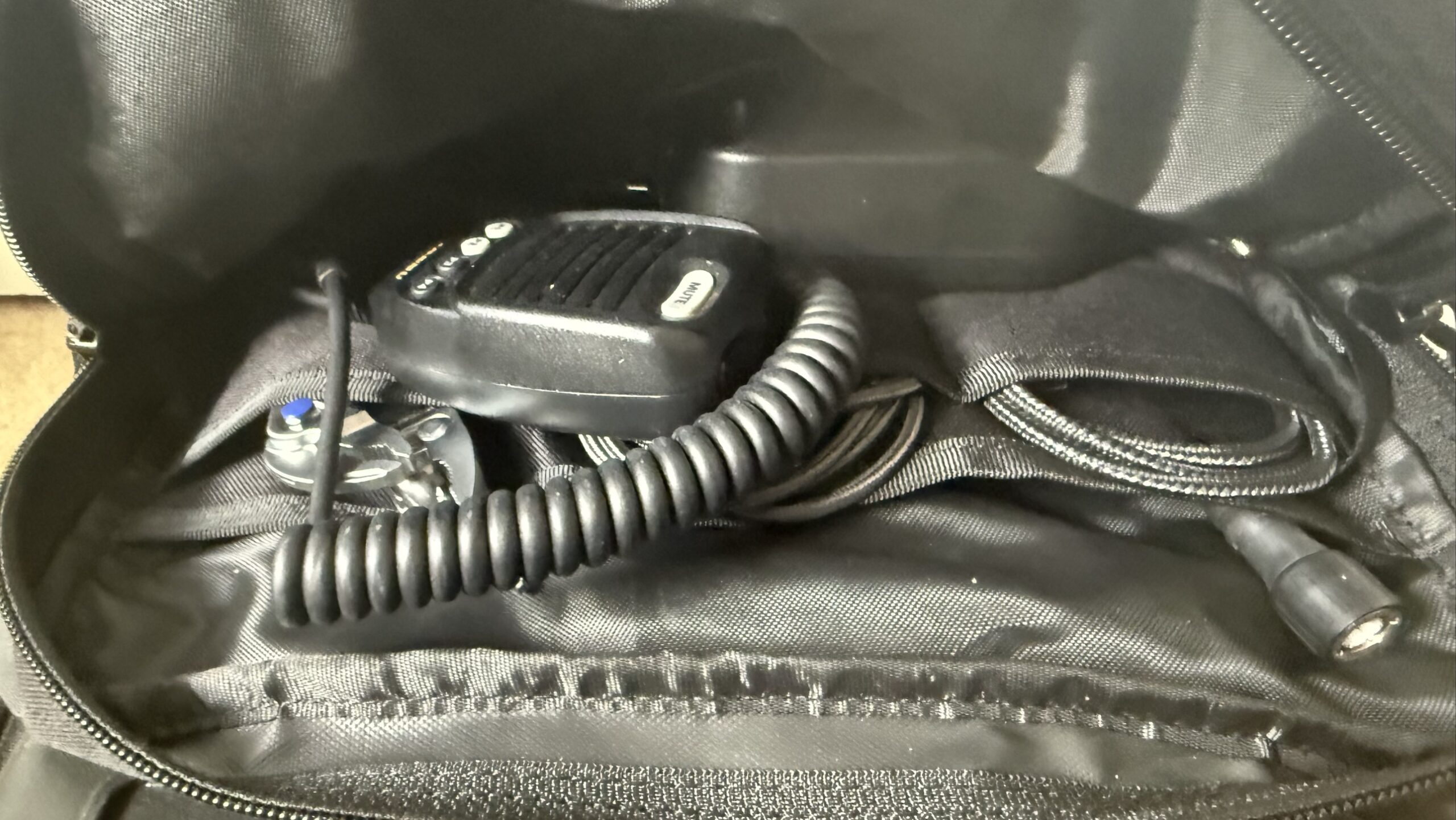
The pouches hold everything I need that doesn’t fit inside the box, so it lives on the box instead. The panels stand off the case slightly, so the pouches don’t interfere with the latches or the handle, and the lid still opens all the way to get to the radio.
What Rides in the Pouches
Between the three pouches, everything I need to get on the air goes with the box.
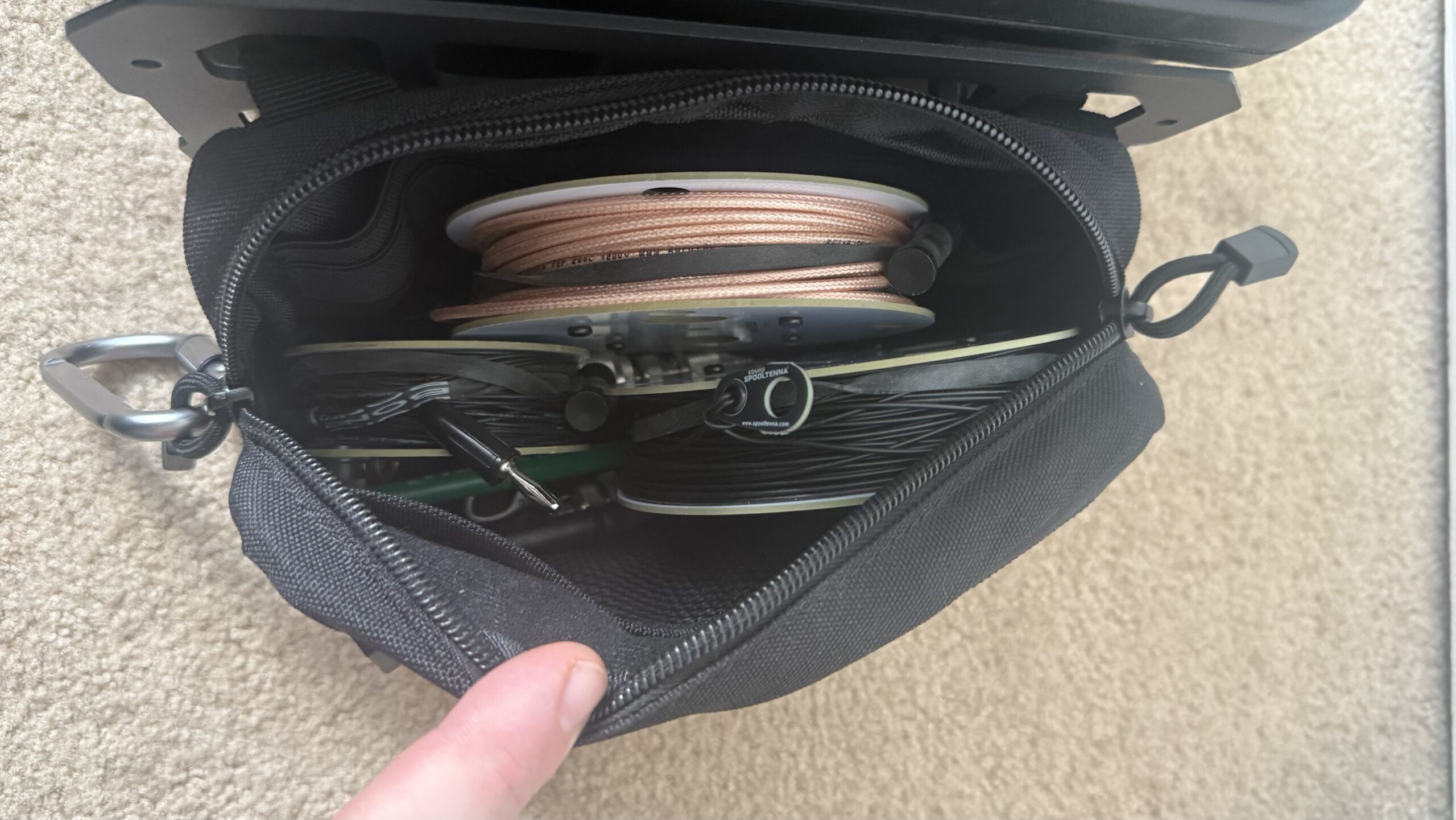
HF Antennas
- Spooltenna 40m EFHW, my go-to HF antenna for this radio (more on that in Pairing the FTX-1 with the Spooltenna).
- Spooltenna 80m antenna wire accessory for when I need 80 meters, like an evening NVIS net.
- 25 feet of Spooltenna RG-174 coax with ferrites, BNC on both ends.
VHF/UHF Antennas
- N9TaxLabs dual band roll-up J-pole with 16 feet of coax built in. Hang it in a tree and I have a real antenna up high.
- ZBM2 Foul Weather Whip, a dual band whip for when there’s nothing to hang the J-pole from.
Getting Antennas Up
When I’m not using a mast, a throw bag and a length of 550 cord get the antenna up in a tree or over whatever tall object is handy. That’s how the EFHW and the J-pole get height without carrying anything long or heavy.
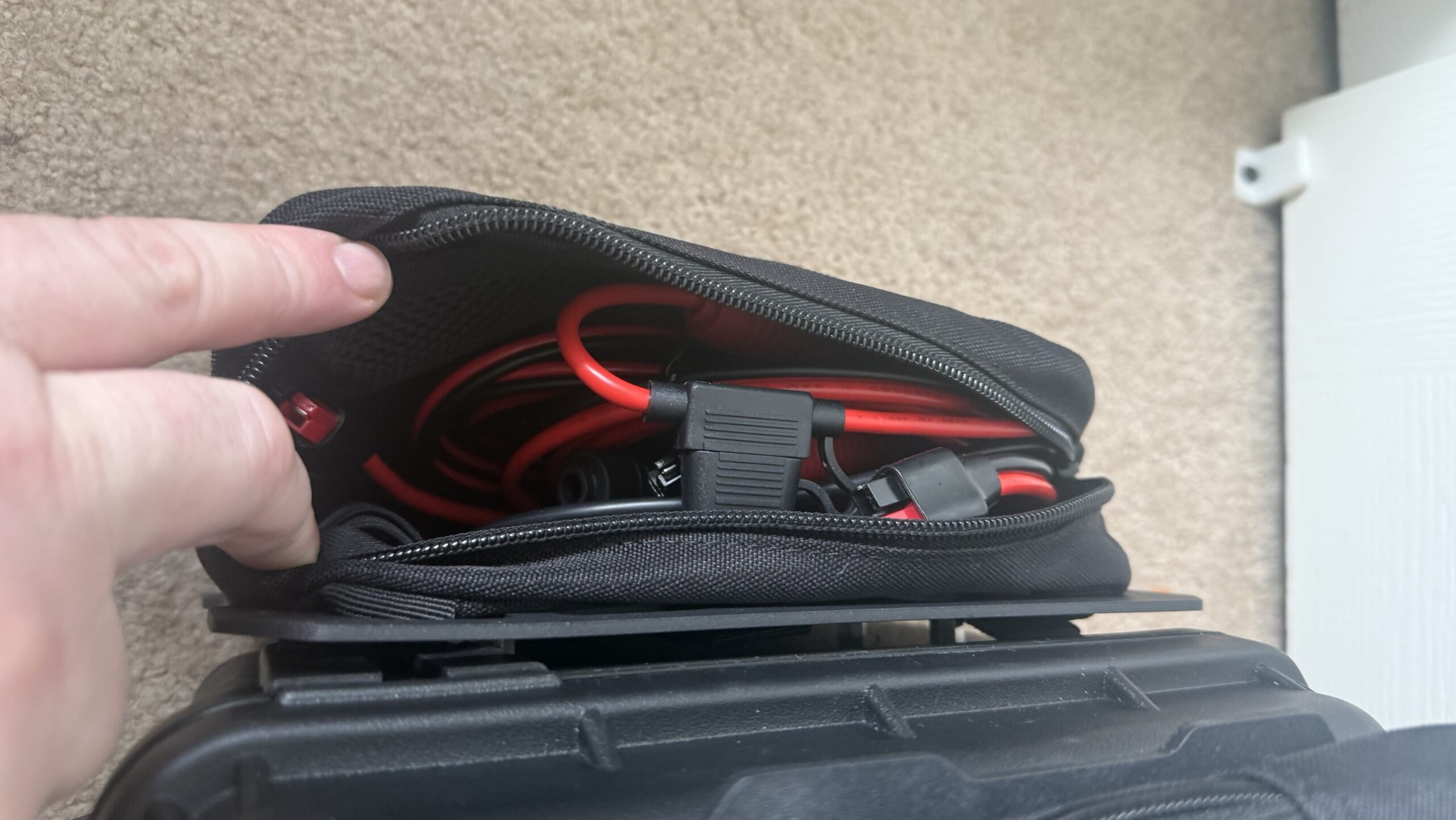
Power
- 6-foot Powerpole extension to reach my 100Ah battery box.
- 12V cigarette lighter to Powerpole adapter for running off a vehicle.
- A Powerpole to alligator clip feed for clamping onto any 12V battery. I bought this one, cut the XT60 off, and put a Powerpole connector on it.
That’s three ways to feed the box: my battery box, a vehicle, or whatever 12V battery is sitting around. One note on the lighter socket: most are fused somewhere around 10 to 15 amps, so that adapter is for receive and reduced power. For a full 100 watts I go straight to a battery.
Audio
An Icom speaker lives in one of the side pouches. It comes right out and plugs into the radio when I’m working SSB.
USB Cables and GPS
- Braided USB-C to USB-C cable from Digirig, for a laptop or tablet with USB-C.
- Coiled USB-A to USB-C cable from Digirig, for anything that still has a USB-A port. Between the two, I can hook up whatever computer is on hand for FT8, JS8Call, or CAT control.
- The GPS module for the FTX-1, which plugs into the GPS jack on the panel.
What Stayed the Same
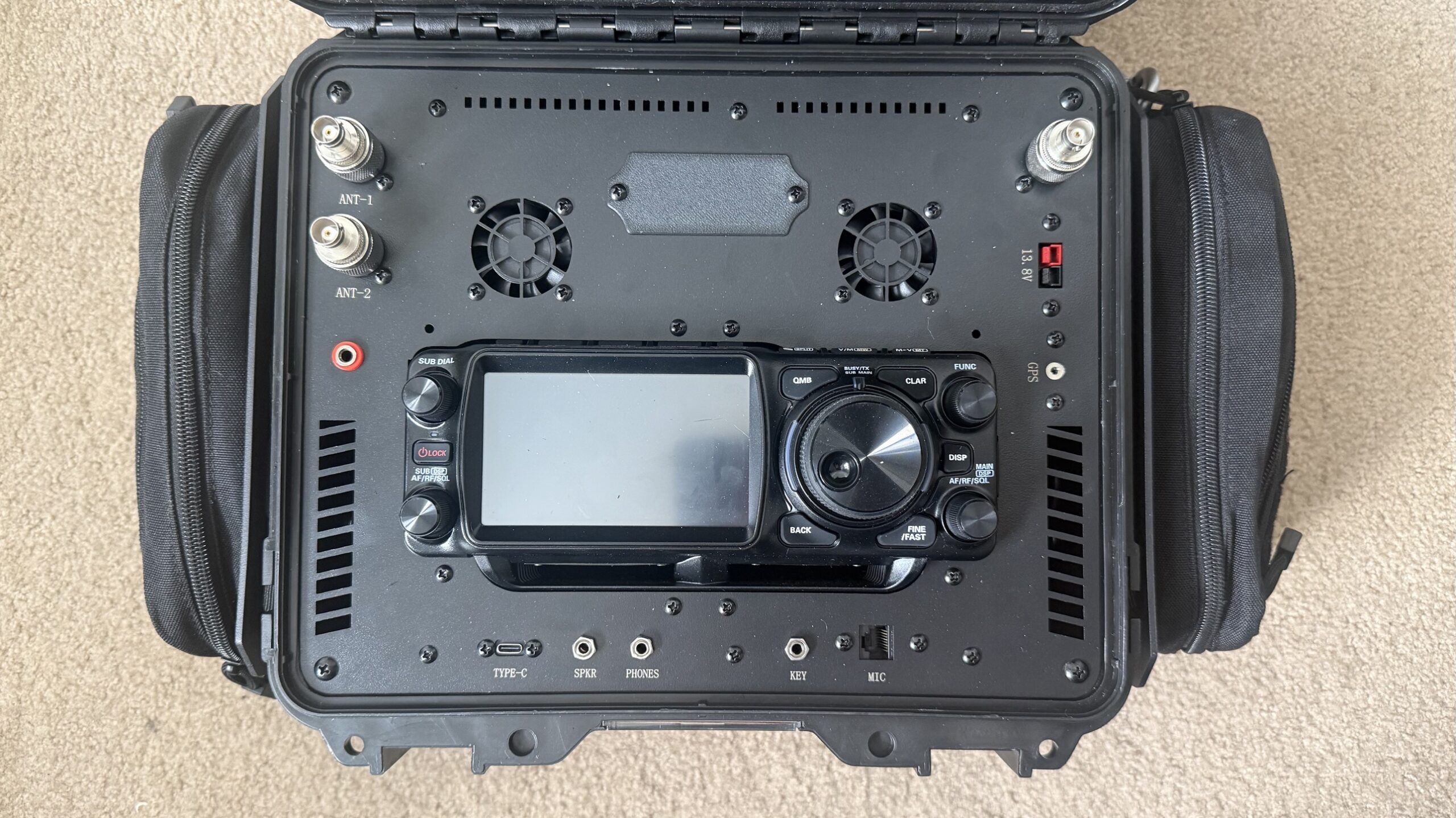
The core of the box is the same FTX-1 Optima case from eBay: a waterproof hard case with the radio and the SPA-1 Optima amp mounted inside and everything broken out to the front panel. Two HF antenna ports, a VHF/UHF port, Powerpole 13.8V input, GPS, USB-C, speaker, phones, key, and mic jacks. That gives me 100 watts on HF, plus 6 meters, 2 meters, and 70 centimeters from one radio. The FTX-1 has a built-in digital interface, so FT8 and JS8Call only need a USB cable to a laptop.
Before and After
| Original Go-Box | Updated Go-Box | |
|---|---|---|
| Size | 12″ x 12″ x 7″ | 12″ x 18″ x 11″ fully loaded |
| Weight | 16.5 lbs | About 18.5 lbs (about 2 lbs added) |
| Power output | 100 W HF, 50 W VHF/UHF | 100 W HF, 50 W VHF/UHF |
| Power options | Battery box | Battery box, vehicle lighter socket, or alligator clips to any 12V battery |
| HF antennas carried | Spooltenna, in a separate bag | Spooltenna 40m EFHW plus 80m wire, 25′ RG-174 |
| VHF/UHF antennas carried | J-pole or whip, in a separate bag | N9TaxLabs roll-up J-pole and ZBM2 whip |
| Antenna support | Not carried with the box | Throw bag and 550 cord |
| Where the accessories ride | Separate loose bag, easy to forget | Three MOLLE pouches attached to the box (lid and both sides) |
Where It Fits in My Emergency Plan
The job hasn’t changed. This is still my bridge station, the one I describe in Your Repeater Is Not a Plan. It checks into a regional HF NVIS net on 40 or 80 meters, then passes that traffic to local handhelds on 2 meters or 70 centimeters simplex. With the 80m wire, a way to get antennas up, and three power options riding along, it’s a lot less dependent on what’s waiting for me when I get there. My 2m/70cm grab-and-go box handles the local layer for the family, and this box reaches past it.
For hike-in activations and quick callouts I still grab the lighter FTX-1 go-bag built around the Field unit.
Worth the Trade?
The box went from 12 x 12 x 7 inches to 12 x 18 x 11 fully loaded, and picked up about two pounds. In exchange, the whole station comes with me in one hand: radio, amp, HF and VHF/UHF antennas, coax, a way to get the wire into a tree, three ways to power it, and a speaker. Nothing gets left in the truck, and nothing gets left behind at the site.
If you want the full background on the case, the cost, and why I went with a hard box instead of a bag, start with the original FTX-1 go-box post.