
Part of our Getting Licensed guide.
I’m a Volunteer Examiner, and I run license exam sessions through ExamTools regularly. This guide covers both sides of the table: what it takes to become a VE, what online exam platforms actually do behind the screen, and how remote and in-person testing compare if you’re the one taking the exam.
Jump to: Becoming a VE · How ExamTools works · Remote vs in-person
How to Become a Volunteer Examiner

I still remember not knowing this was something an ordinary licensed ham could do. It is, and the bar is lower than people expect.
- License class: General or higher to give Technician exams, Advanced or Extra to give General, and Extra to give the Extra exam.
- Other requirements: at least 18 years old, and never had an amateur license revoked or suspended. There’s no separate FCC exam, though some VECs, including ARRL/VEC, have new VEs complete a short open-book test on their VE manual.
- Pick a VEC. Volunteer Examiner Coordinators like ARRL/VEC and W5YI accredit VEs. Most people choose whichever one their local club or the online platform they want to work with already uses. Fill out the accreditation application, agree to the code of conduct, and you’re usually accredited within a few weeks.
- Shadow a session first. In person or online, sit in with an experienced team before running one. You’ll learn the mechanics fast: verifying identity, giving the right element, CSCE paperwork and submitting results. Doing it once alongside someone who’s run dozens saves you the small mistakes everyone makes the first time.
It’s worth it. VE teams are thin in a lot of areas, and every new ham you test is someone who might not have gotten licensed without a session available. If you’re reading a site like this, you’re the kind of person the exam pipeline needs.
How ExamTools and Online VE Platforms Work
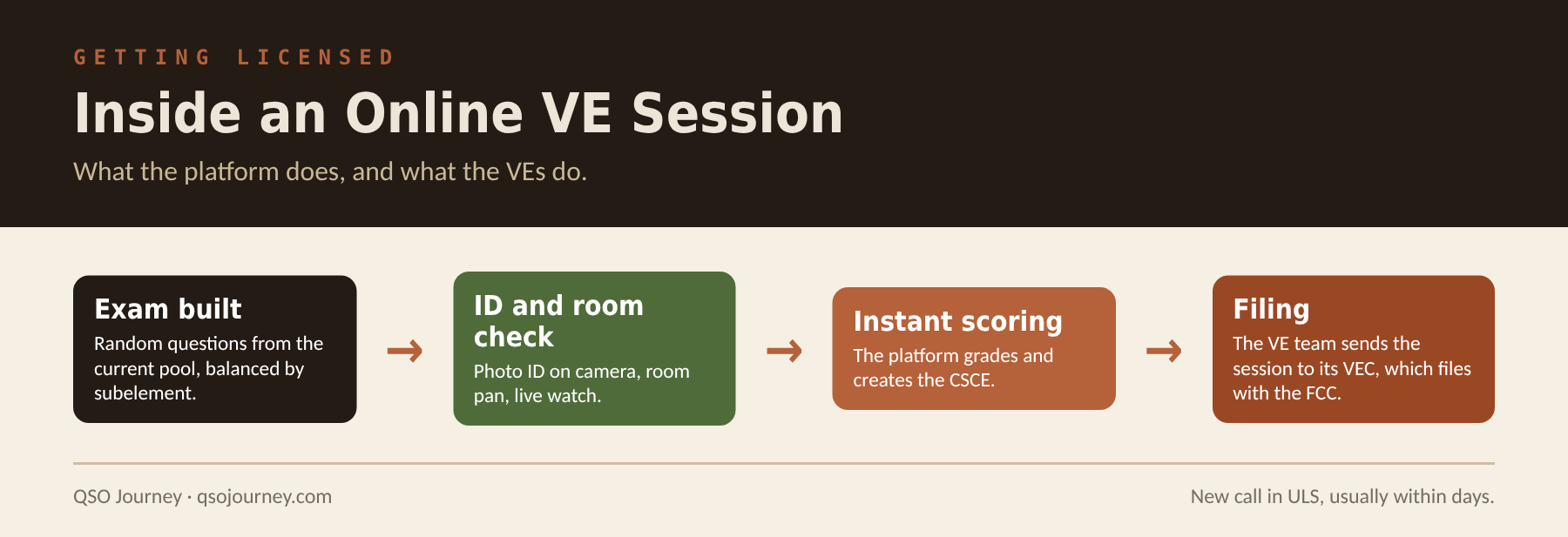
- Exam generation. Each exam pulls a random set from the current NCVEC question pool, following the required distribution across subelements, so every test is balanced the same way even though the questions differ. The platform generates it, not the individual VE, which keeps it consistent and auditable.
- Identity and integrity. Candidates show photo ID on camera, and VEs watch the whole session live, sometimes with screen monitoring or a 360-degree room pan before starting. It’s not foolproof, but it’s built to catch the obvious problems: someone else taking the test, or a second monitor with answers.
- Scoring. Instant, and the platform generates the CSCE (Certificate of Successful Completion of Examination) automatically.
- Filing. The VE team submits the session to its VEC, and the VEC files with the FCC. That’s what turns a passing score into a license in the ULS database, usually within a few business days.
It’s not a black box. It’s the same rules that have governed ham licensing for decades, running in a browser instead of at a folding table. What a candidate experiences on the day is in VE Session Day.
Remote vs In-Person Testing: What’s Actually Different
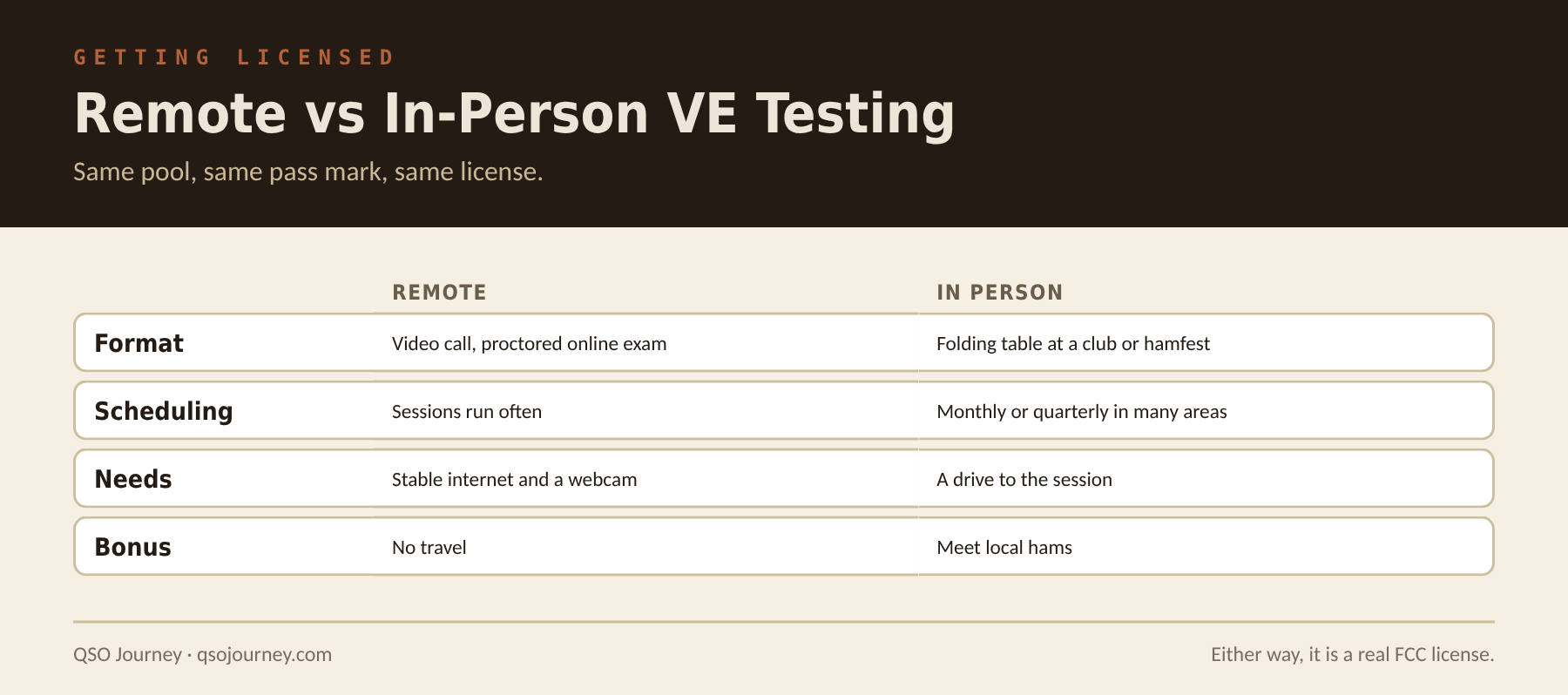
People are still surprised that remote testing is a legitimate path to a real FCC license. It absolutely is. You join a video call, show ID, and take the exam on a proctored platform while VEs watch. Same NCVEC pool, same passing standard, same FCC filing.
- Remote wins on scheduling and distance. Sessions run far more often than most clubs’ monthly or quarterly dates, so you’re rarely waiting weeks for a seat, and it removes the problem of having no testing location nearby.
- In-person wins on community. Local club sessions mean you walk out having met people you’ll see at meetings and on nets, which matters for a new ham without a mentor. There’s also no dependence on a stable internet connection and webcam on exam day.
My honest take: if a decent local club runs sessions, go in person at least once to meet your local community. If scheduling or distance is the obstacle, remote is a completely legitimate, no-asterisk way to get licensed. Either way, practice on a screen first. My Exam Trainer runs full practice exams from the current pools for all three classes and saves your scores, so you’ll know you’re ready before you book. More in Take Your Ham Radio Exam Online.