
Part of our Handheld Radios (HTs) guide.
I keep pulling up the same four questions on every new radio that lands on the bench: how do I program a repeater, how do I get into VFO mode, how do I adjust power, and how do I scan. Every radio buries these in a different menu tree, so I built a one-page field card for each one. Print them, laminate them, toss them in the go-bag with the radio they match.
Twenty-two cards below, one per radio, sorted alphabetically. Each covers the same four tasks in the same order so you can flip between them without relearning the layout. Tap or click any card to see it full size.
Jump to a radio: Ailunce HD2 · AnyTone AT-D578UV III Plus · AnyTone AT-D878UV II Plus · Baofeng BF-F8HP · Baofeng DM-1701 · Baofeng UV-5G · Baofeng UV-5R · BridgeCom Maverick · BTECH DMR-6X2 PRO · BTECH UV-50PRO · BTECH UV-PRO · Icom IC-2730A · Kenwood TH-D75A · TIDRadio TD-H3 · VGC VR-N76 · Wouxun KG-1000G · Wouxun KG-935G · Wouxun UV-9G · Wouxun UV-9P · Yaesu FT-60R · Yaesu FT-857D · Yaesu FTX-1 (VHF/UHF)
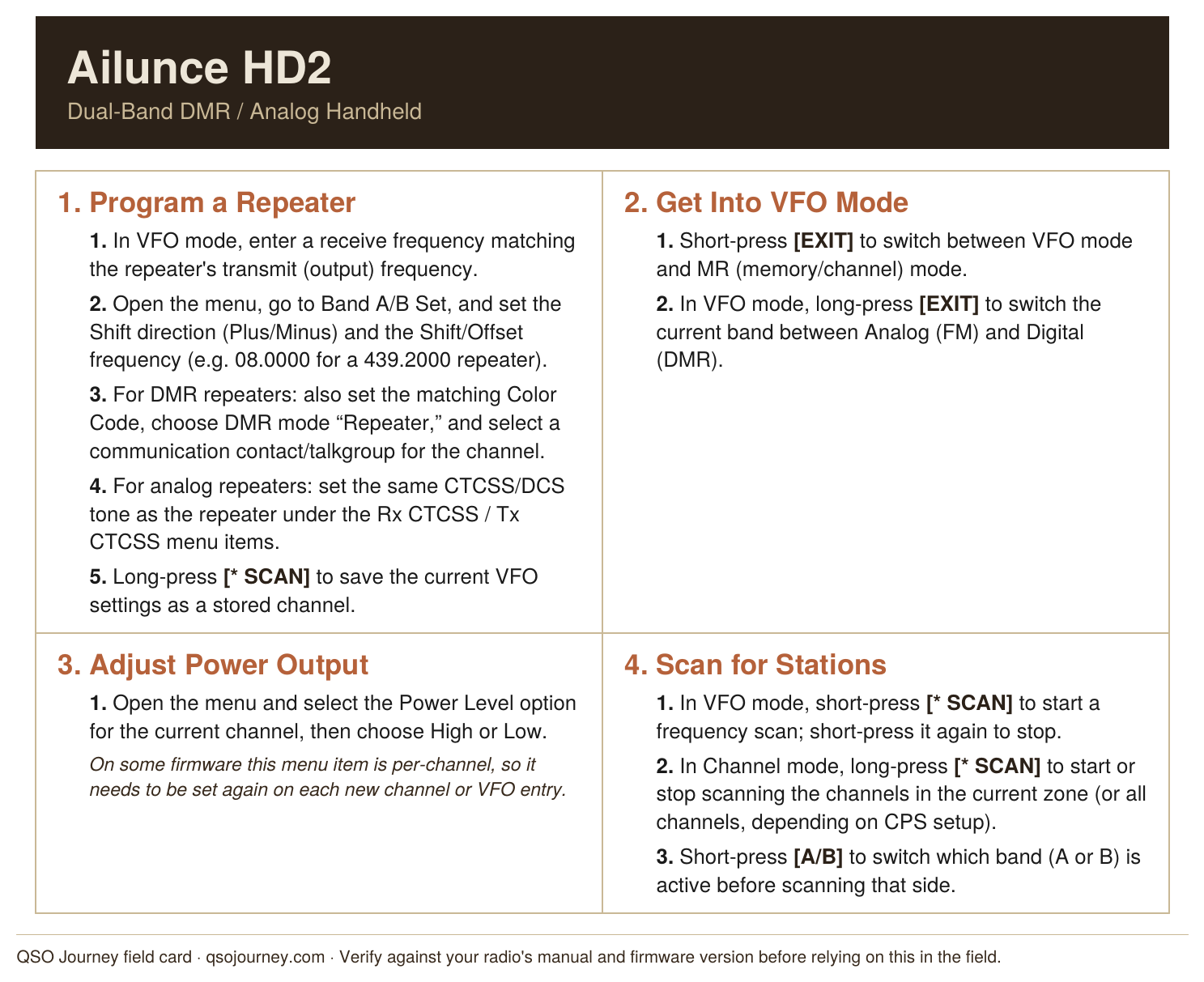
Ailunce HD2
Dual-band DMR/analog handheld. A long-press of EXIT flips a band between analog and digital right from VFO mode, which is handy when you’re bouncing between an FM simplex channel and a DMR repeater. I cover the catch worth knowing about in my HD2 review.
AnyTone AT-D578UV III Plus
The dual-band DMR/analog mobile riding in the Jeep. Same platform and menu logic as the 878, just on a mic keypad instead of a handheld keypad, and it ships keypad-locked out of the box. Here’s why I own three of them.

AnyTone AT-D878UV II Plus
Dual-band DMR/analog handheld. VFO/MR and Power both live behind programmable P-keys, so the first step on a fresh radio is assigning them before anything else works the way you expect. More on why it’s still one of my go-to handhelds.

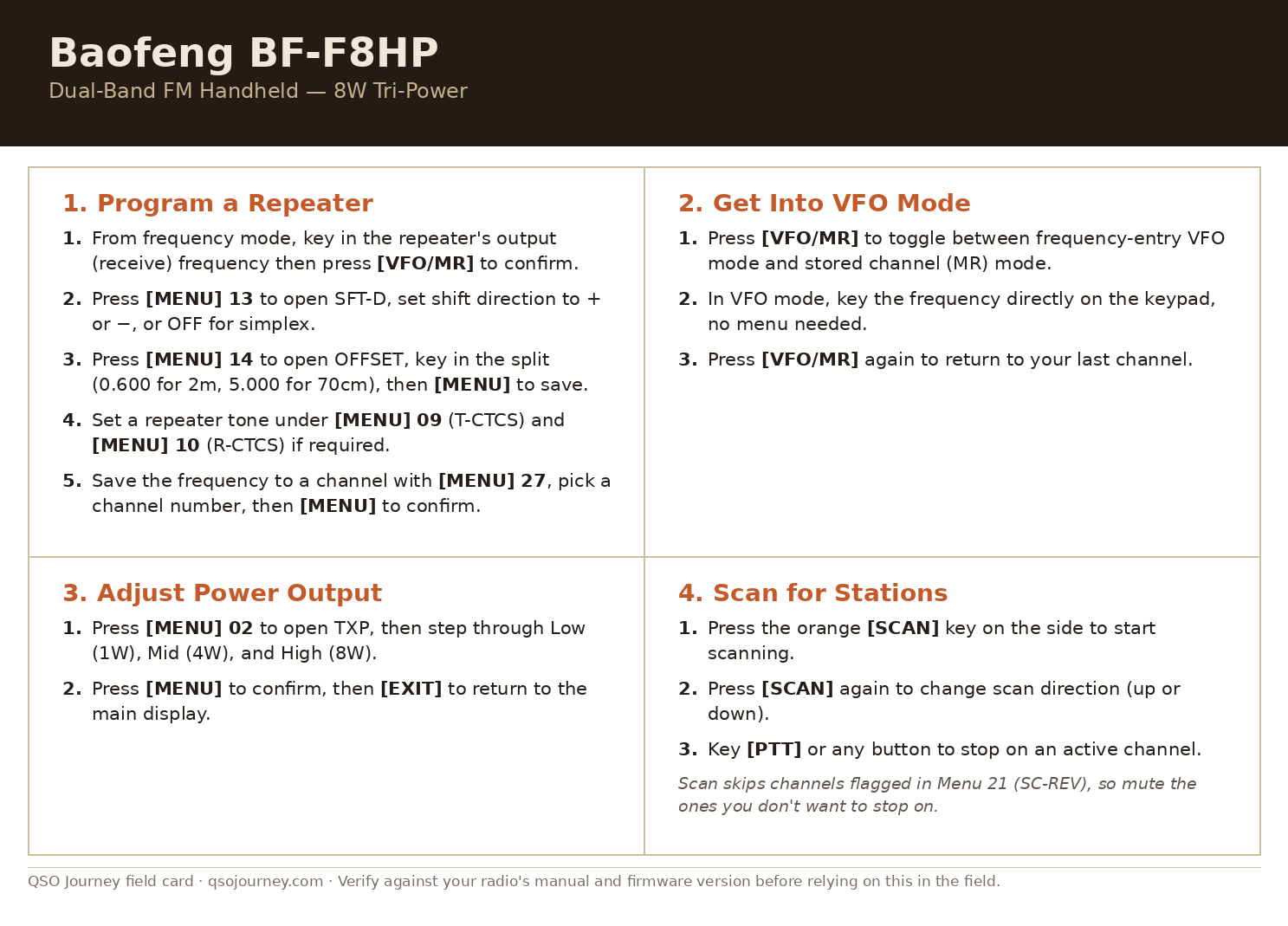
Baofeng BF-F8HP
The upgraded UV-5R with three power levels instead of two. It runs the same numbered Menu system as the classic, so the shift, offset, and tone items live at the same spots.
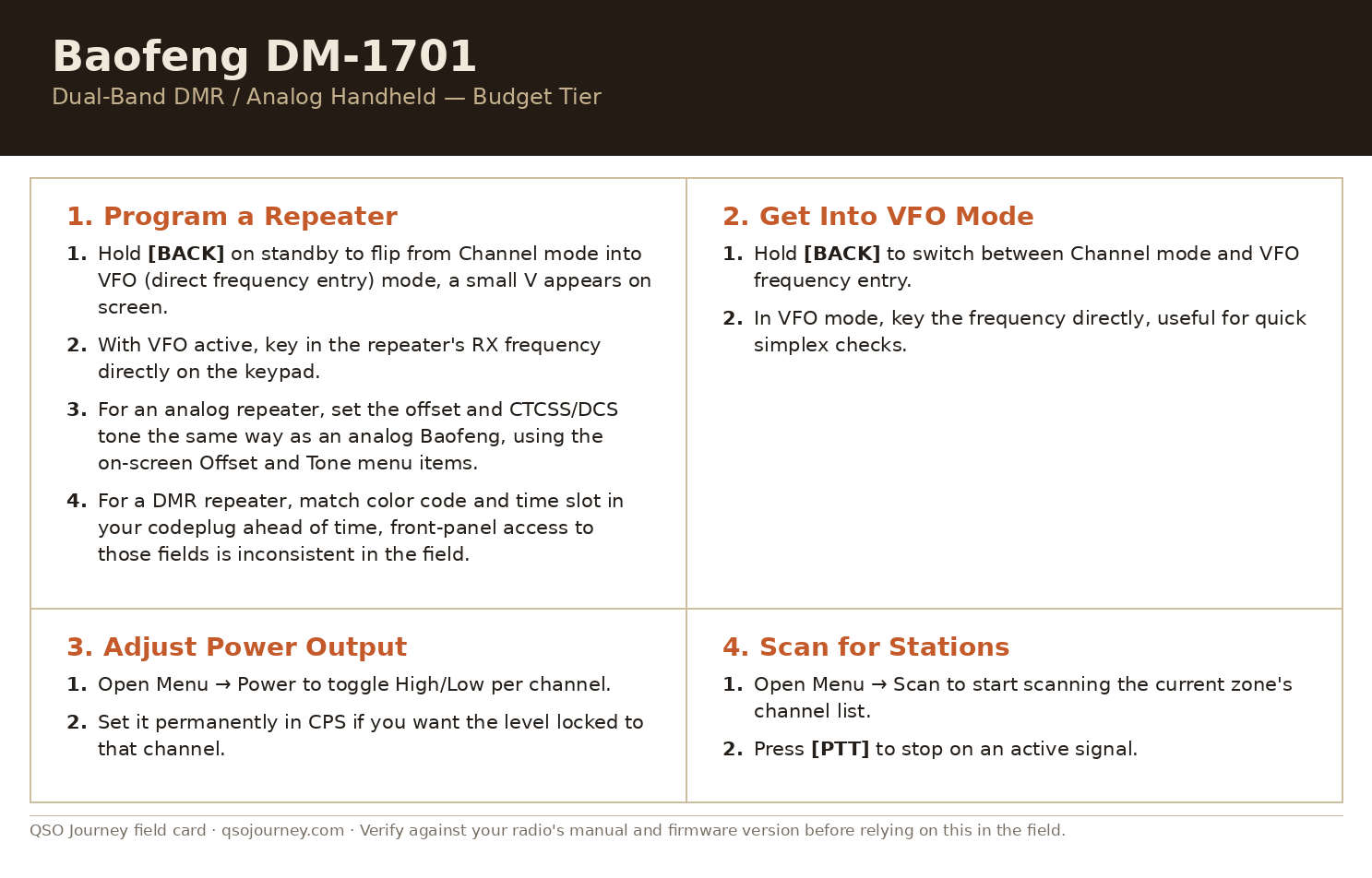
Baofeng DM-1701
Budget dual-mode analog/DMR handheld. Channel building lives in the CPS software, but color code, time slot, and scan all work fine from the front panel.
Baofeng UV-5G
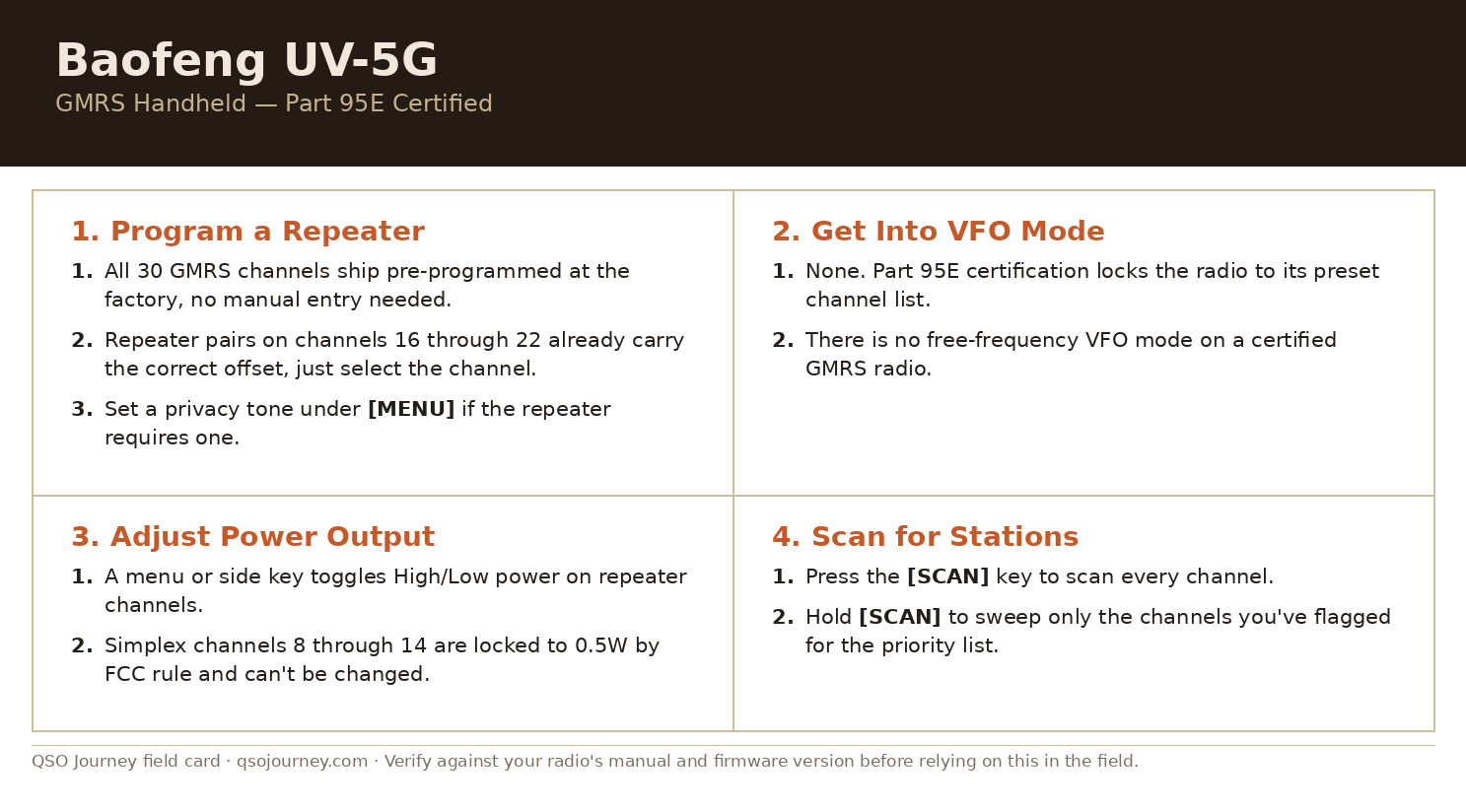
The GMRS-certified sibling of the UV-5R. Part 95E rules lock it to the preset channel list, so there’s no VFO mode and no manual repeater shift entry.
Baofeng UV-5R
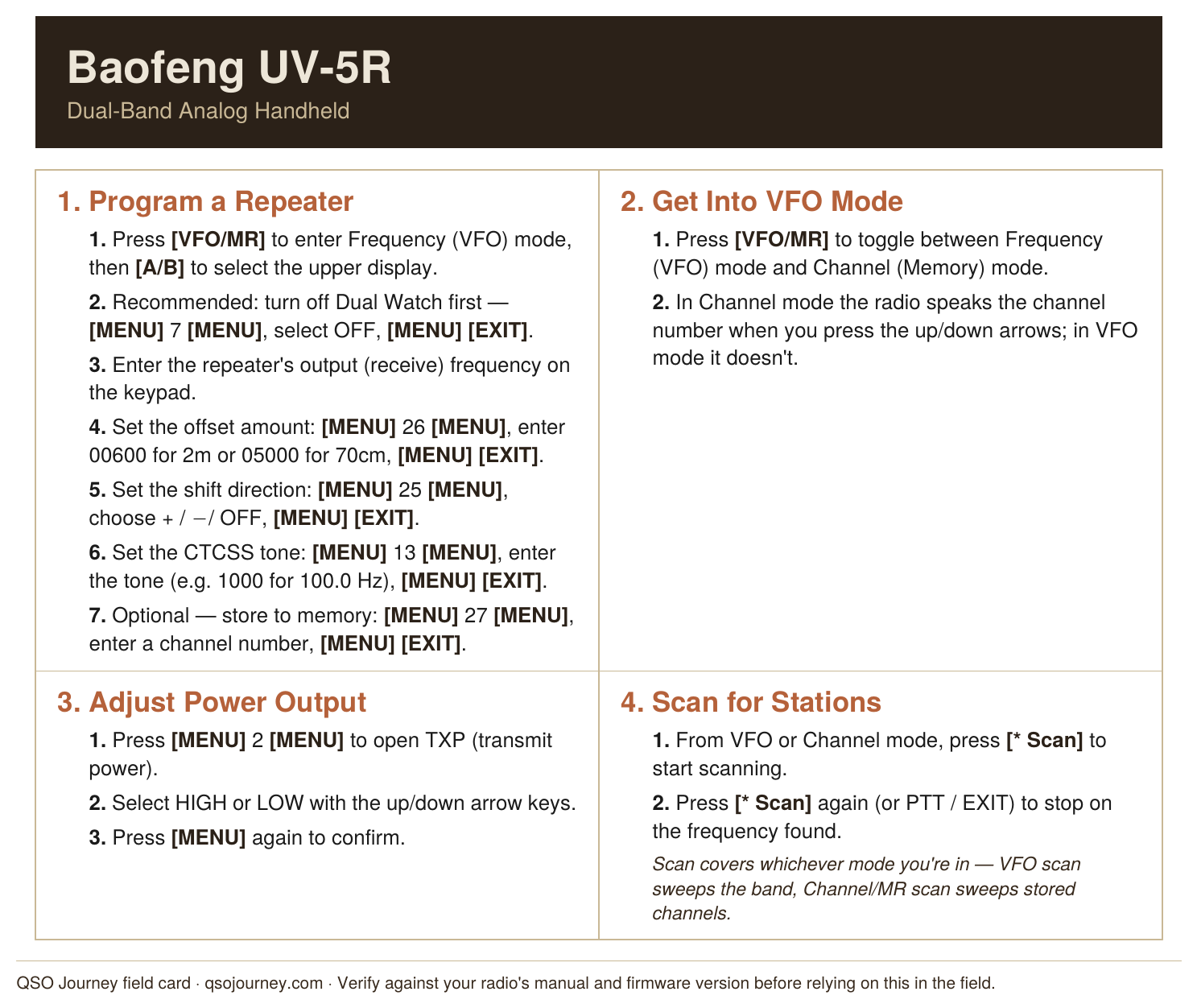
The classic budget dual-bander. Everything runs through numbered Menu items rather than named settings, so this card doubles as a lookup table for the codes that matter most. I go deeper in my UV-5R review.
BridgeCom Maverick
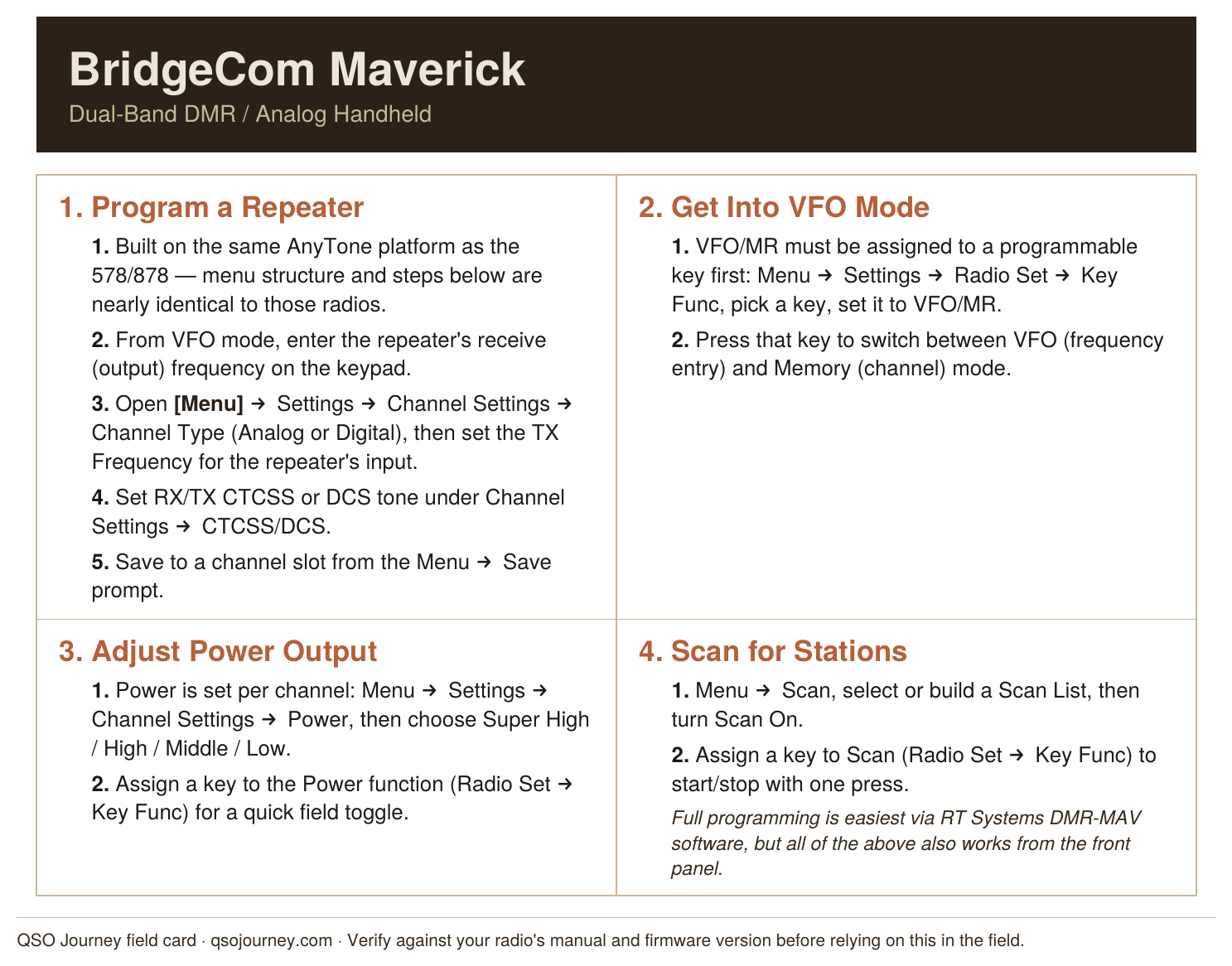
Built on the same AnyTone platform as the 578 and 878, so if you already know one, you know this one. Full programming is easiest through RT Systems DMR-MAV software, but the front panel handles all four basics fine. More in my AT-D890UV / Maverick EDC review.
BTECH DMR-6X2 PRO
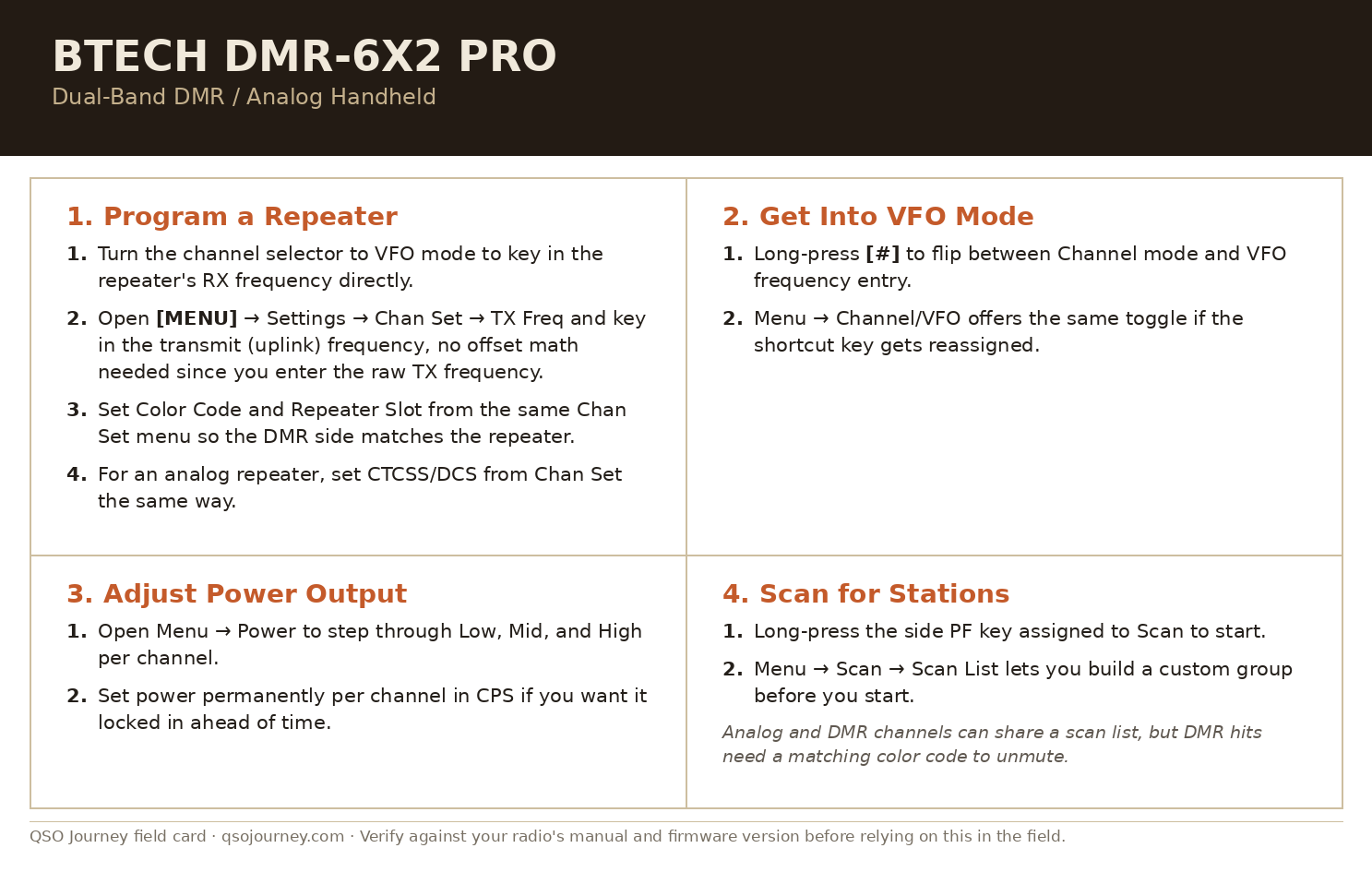
Dual-band DMR/analog handheld built around BTECH’s own CPS software. On-radio quick edits cover color code and frequency without opening a full programming session.
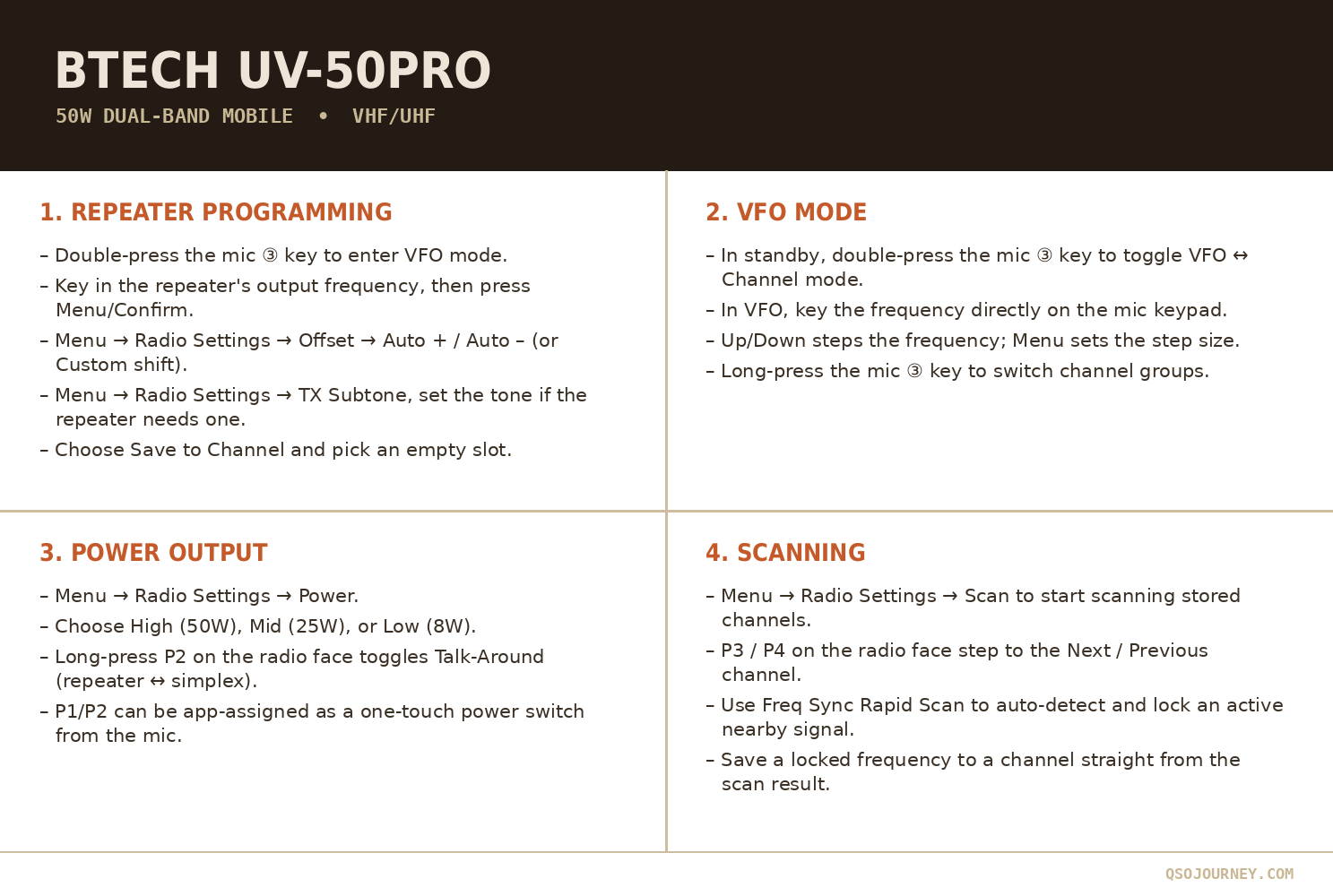
BTECH UV-50PRO
The 50 watt dual-band mobile version of the UV-Pro line, and the base station riding in my family grab-and-go box. Programming runs through the same speaker mic keypad as the UV-Pro, just with more power on tap and a proper offset menu for repeater work.
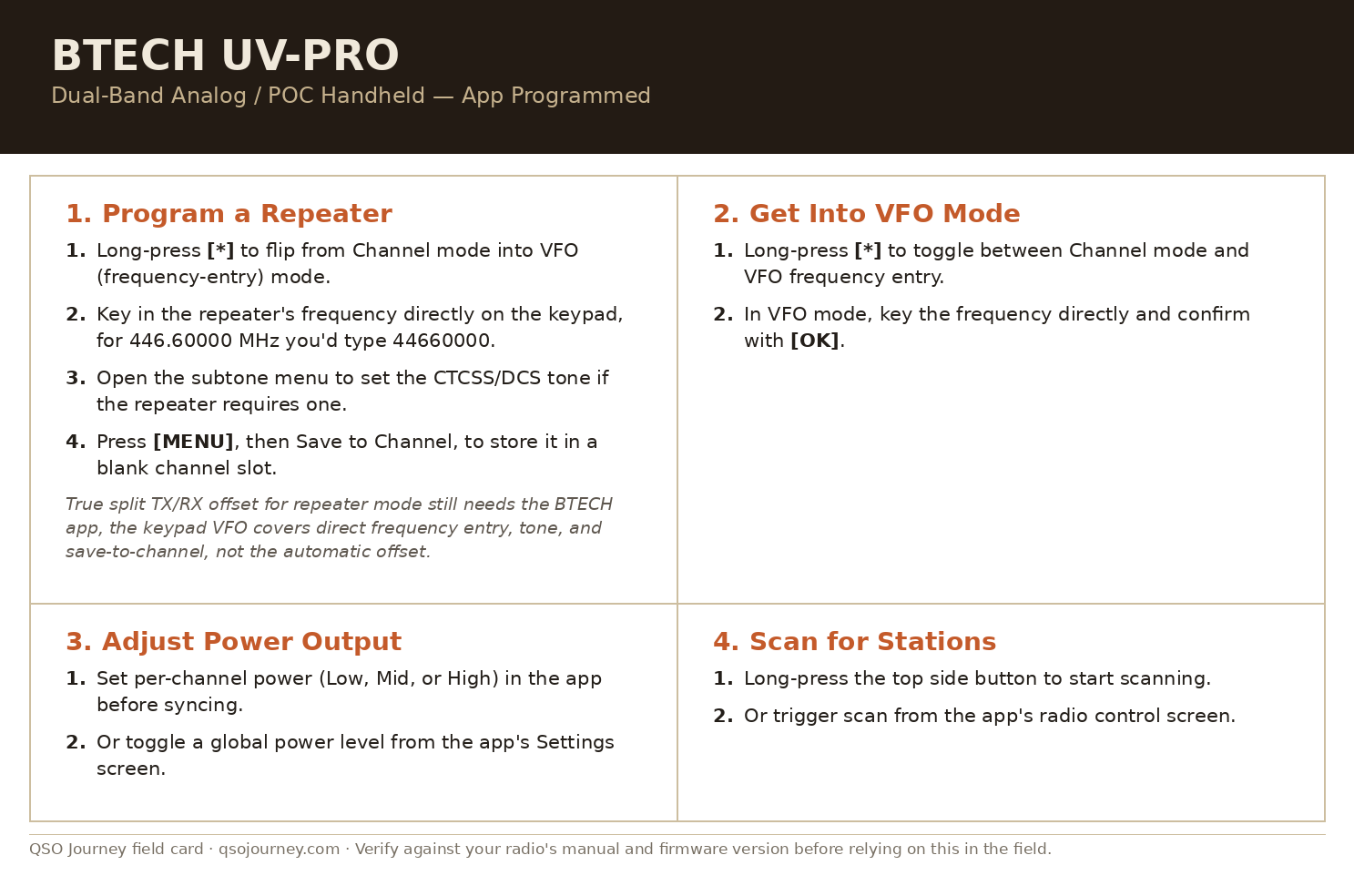
BTECH UV-PRO
Dual-band analog/POC handheld. Long-press the * key to drop into VFO mode and key in a frequency directly, no app required for basic field programming.
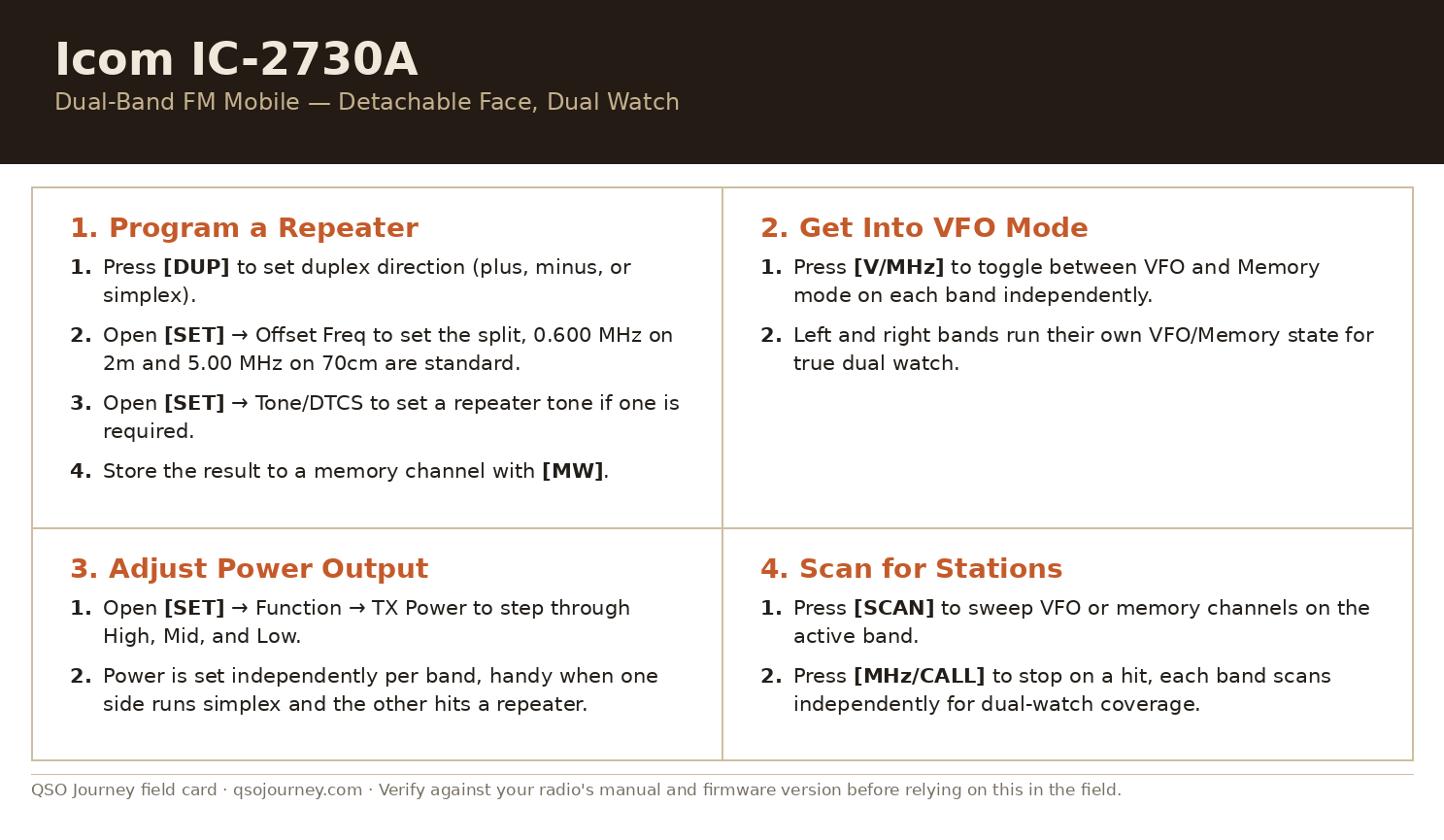
Icom IC-2730A
Dual-band analog mobile with a detachable face and true dual watch. Each band runs its own VFO/Memory state and its own scan, so the two sides never step on each other.
Kenwood TH-D75A
The tri-band D-STAR/APRS handheld. VFO and MR toggle off the same key, and Auto Offset handles standard splits without any manual entry. Full writeup in my TH-D75A review.

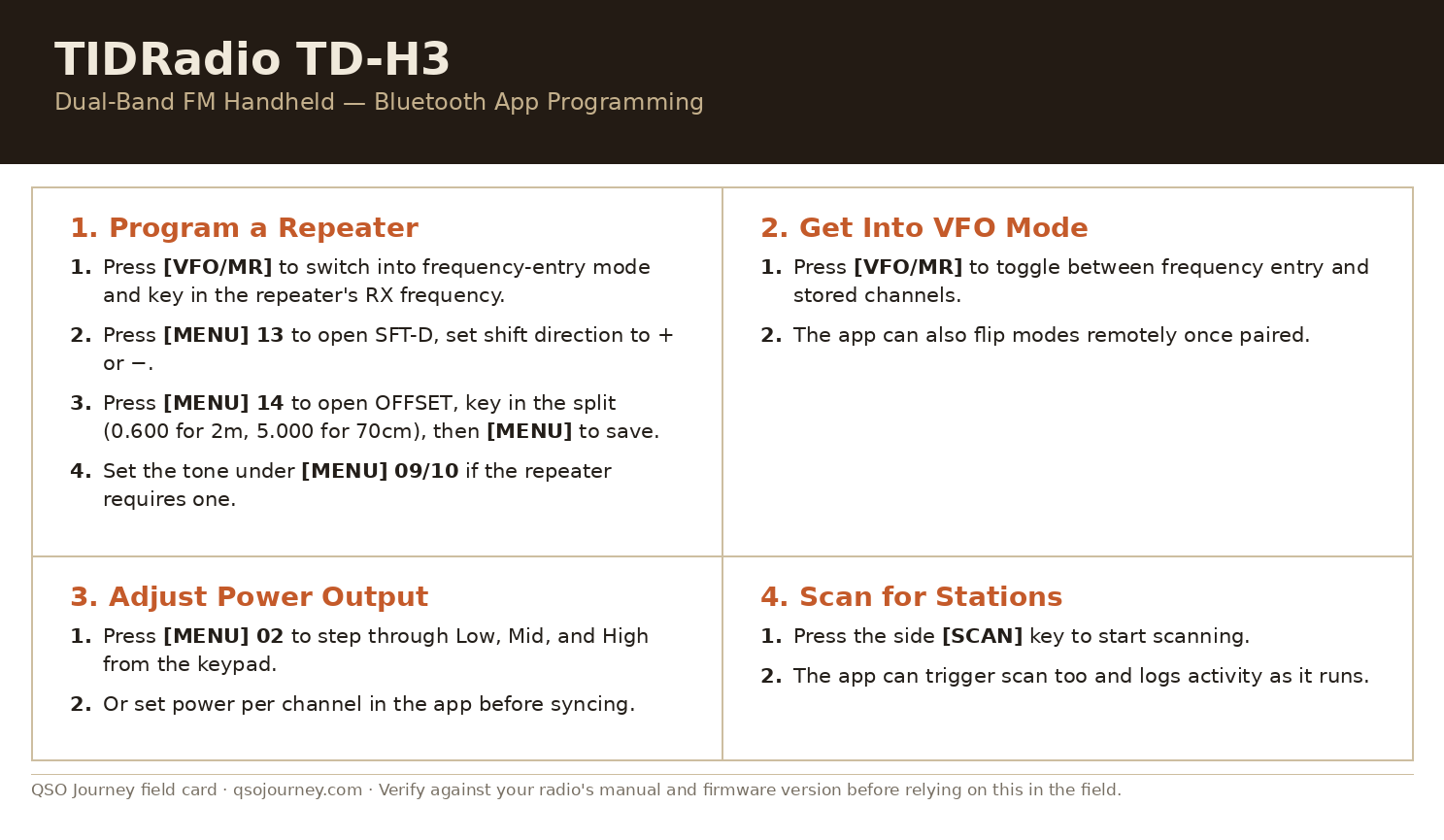
TIDRadio TD-H3
Budget dual-bander programmed over Bluetooth through the TIDRadio app, though the numbered on-radio menu still works fine if you’d rather skip the phone.
VGC VR-N76
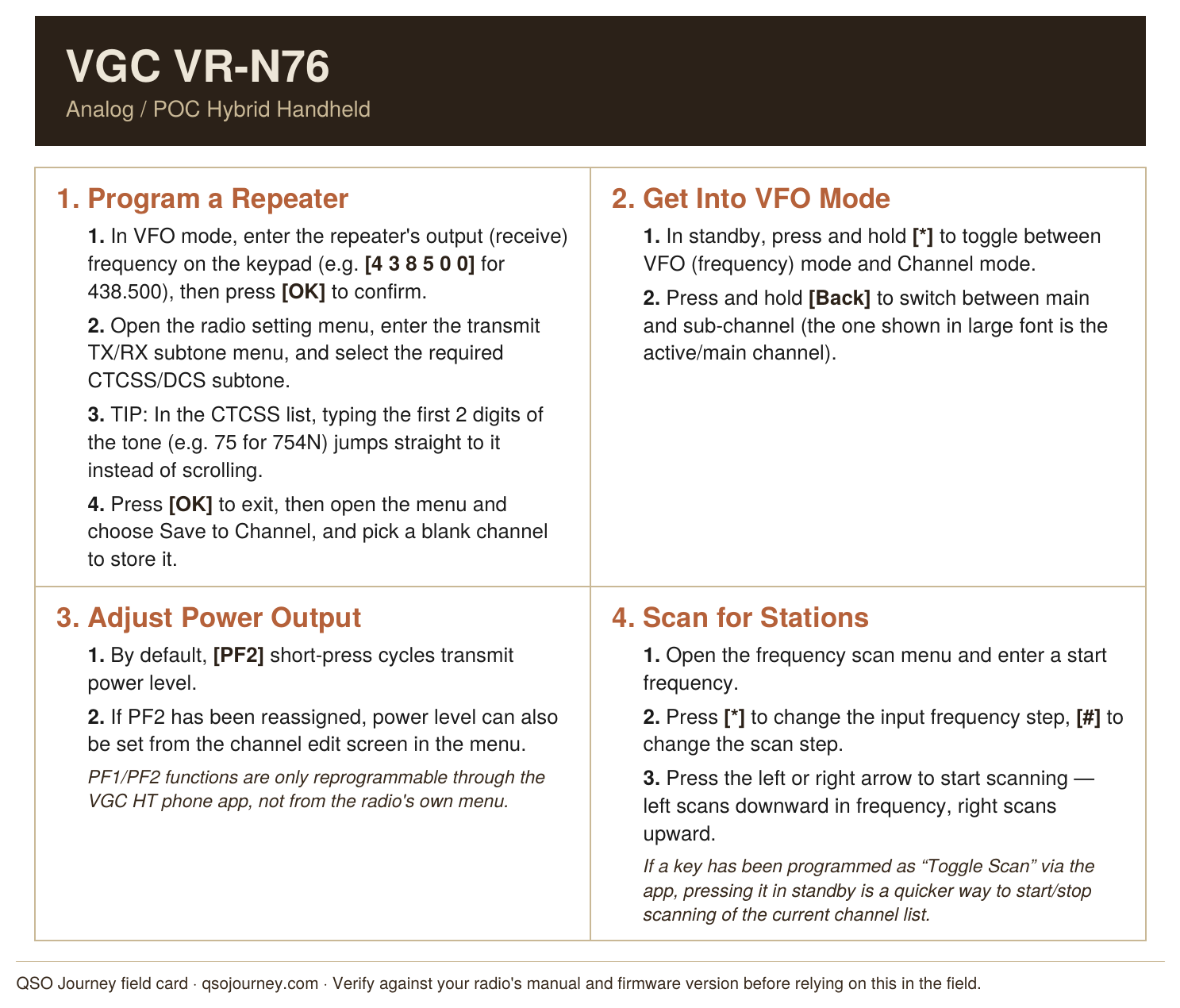
The analog/POC hybrid handheld. Power and scan toggle keys are only reprogrammable through the VGC HT phone app, not from the radio’s own menu, so plan on pairing it with your phone at least once. More in my VR-N76 review.
Wouxun KG-1000G
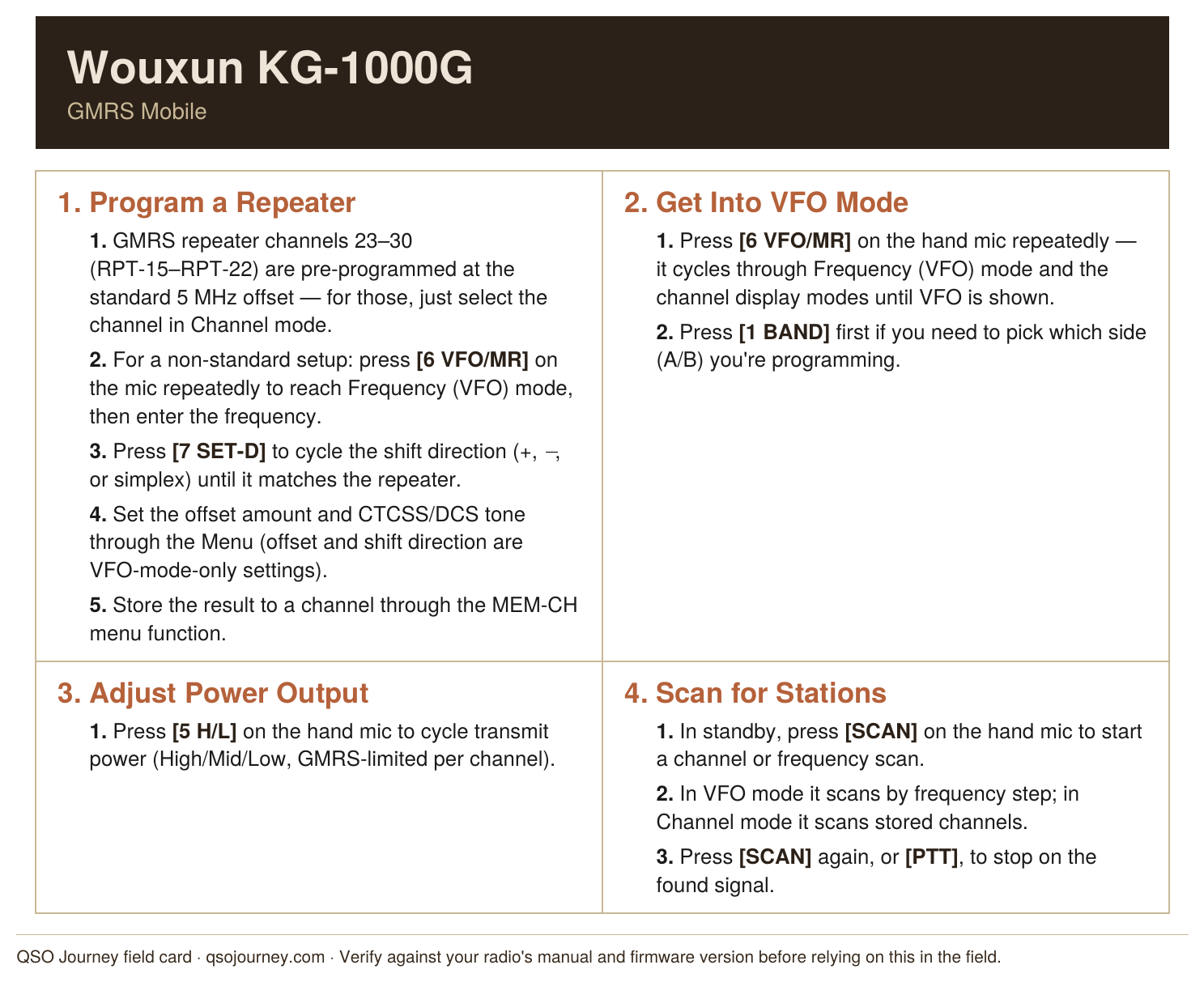
The GMRS mobile. Repeater channels 23 through 30 come pre-programmed at the standard offset, so most of the time you’re just picking a channel rather than building one from scratch. See my GMRS Complete Guide for the bigger picture.
Wouxun KG-935G
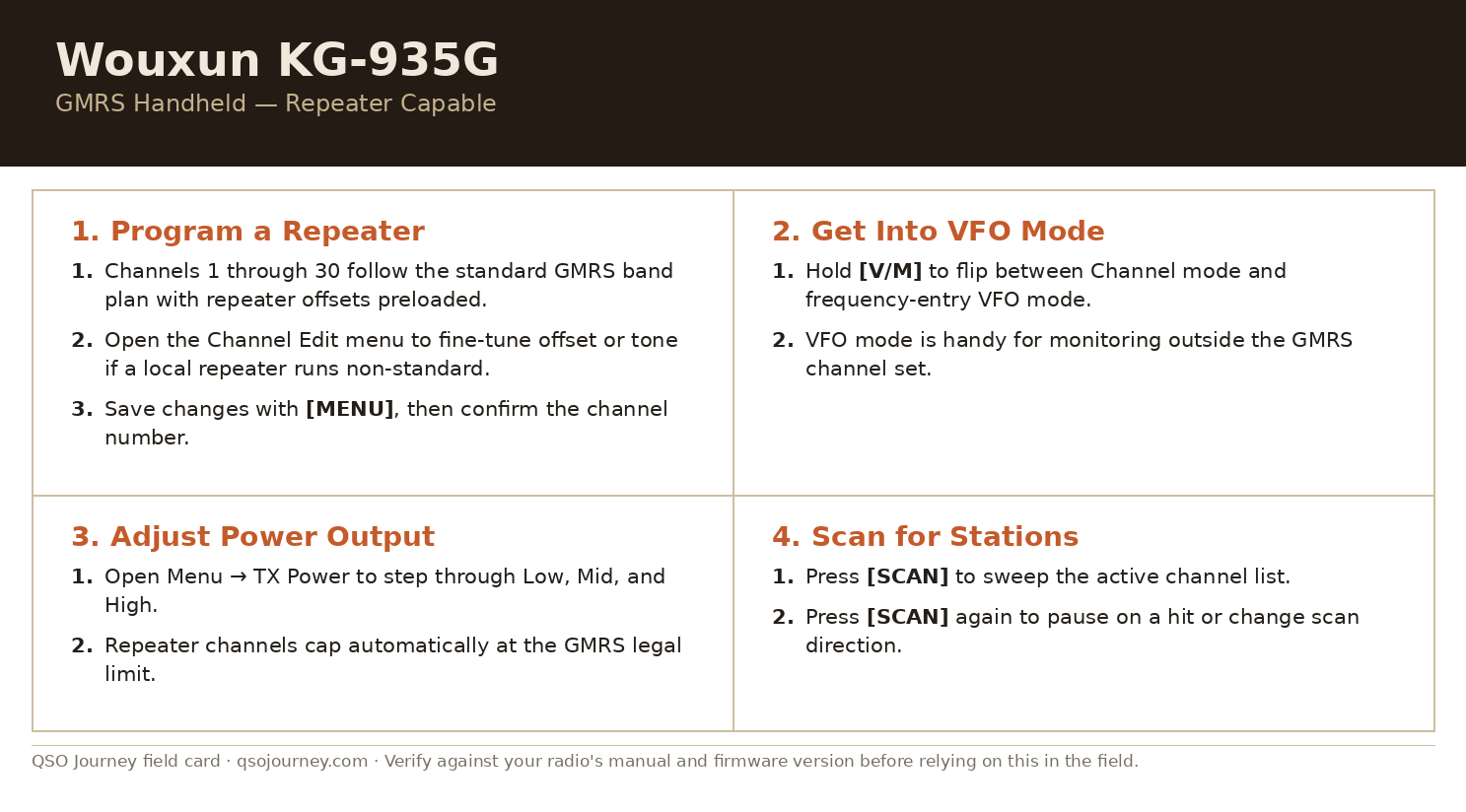
Repeater-capable GMRS handheld with more flexibility than most Part 95E radios, including a proper frequency-entry VFO mode for monitoring outside the channel set.
Wouxun UV-9G
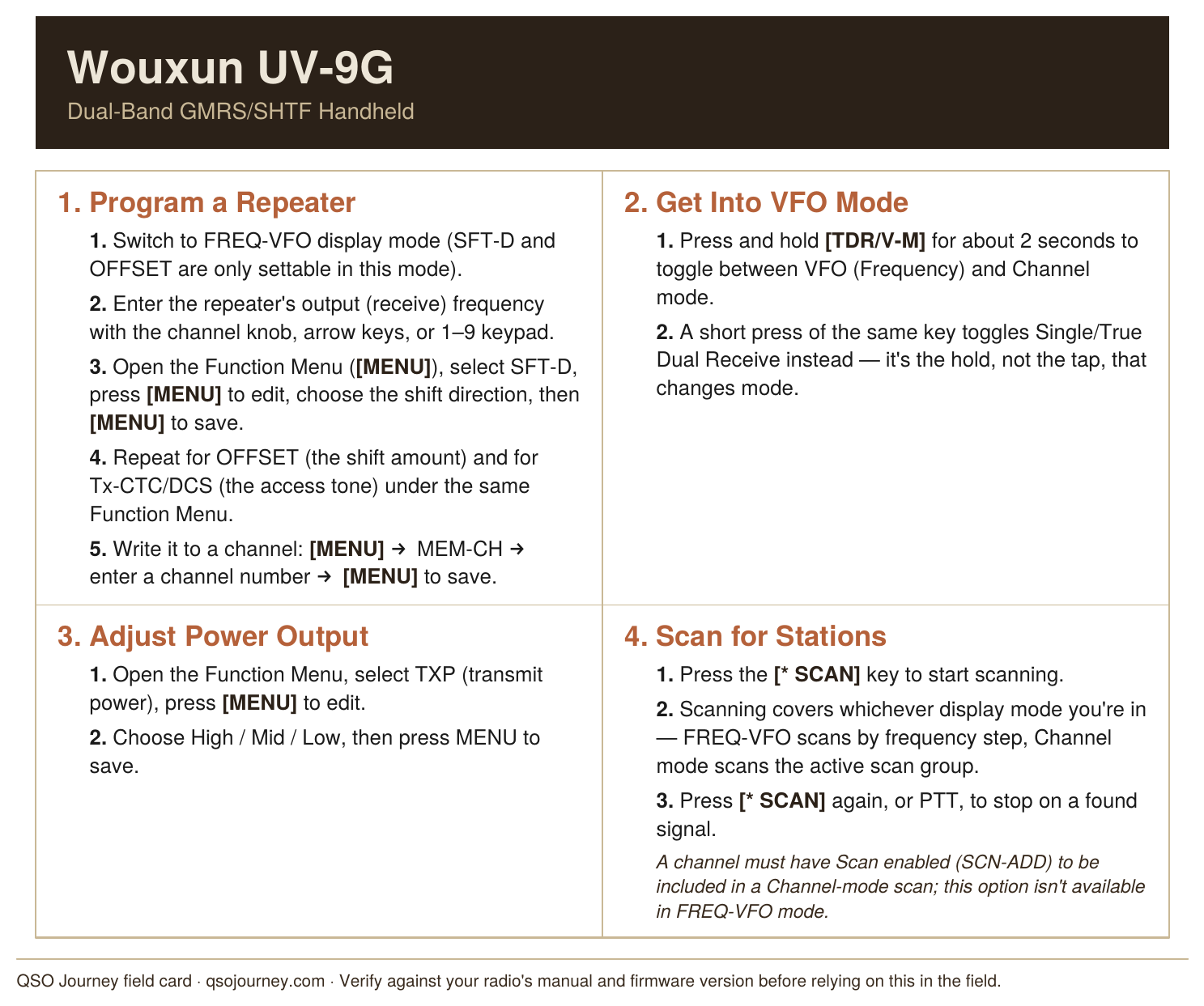
Dual-band GMRS/SHTF handheld. Shift, offset, and tone are only settable in FREQ-VFO display mode, and it’s a hold (not a tap) of TDR/V-M that actually switches modes. Full details in my UV-9G review.
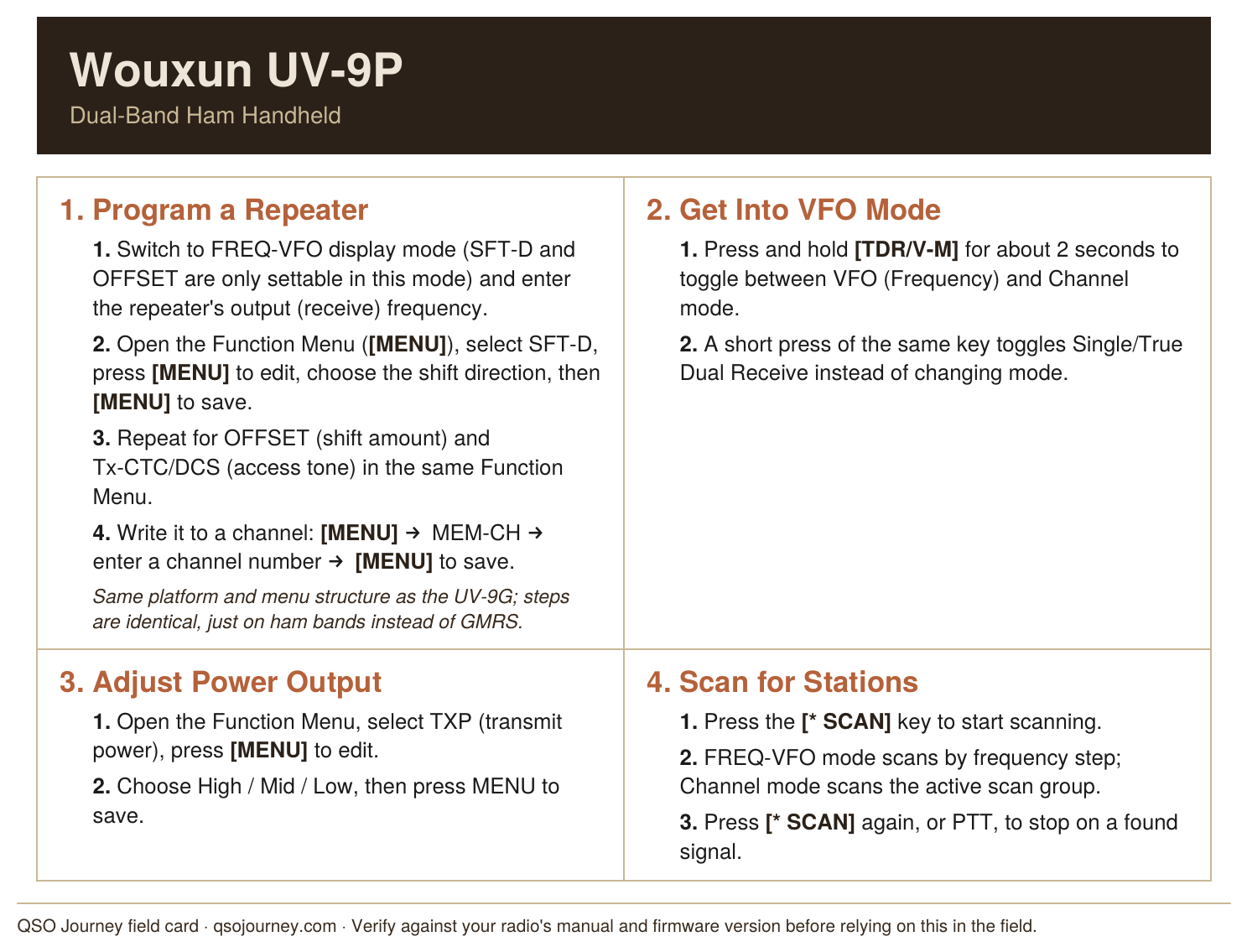
Wouxun UV-9P
Same platform and menu structure as the UV-9G, just on ham bands instead of GMRS. If you’ve programmed one Wouxun in this lineup, this card will feel familiar. I get into more detail in my UV-9P review.
Yaesu FT-60R
Yaesu’s rugged workhorse handheld. ARS sets the repeater offset automatically inside a standard band segment, and holding the F key unlocks the rest of the settings.

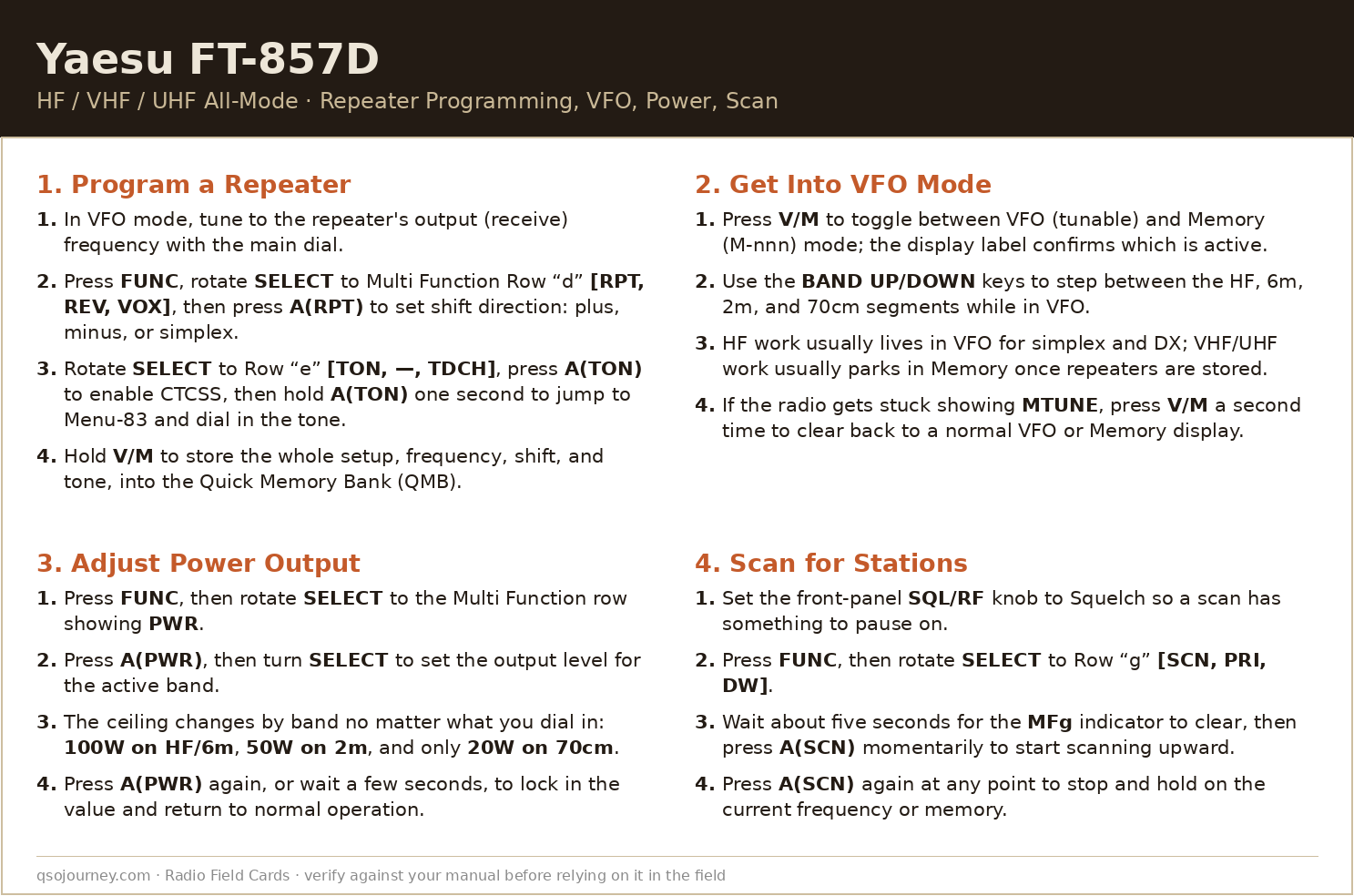
Yaesu FT-857D
The all-band mobile that does HF, VHF, and UHF in one chassis. Repeater shift lives under Multi Function Row “d”, tone under Row “e”, and the power ceiling drops from 100W on HF/6m to 50W on 2m to just 20W on 70cm. I get into the menu quirks in more depth in Taming the FT-857D’s Menu, part of The Yaesu FT-857D: The Complete Guide.
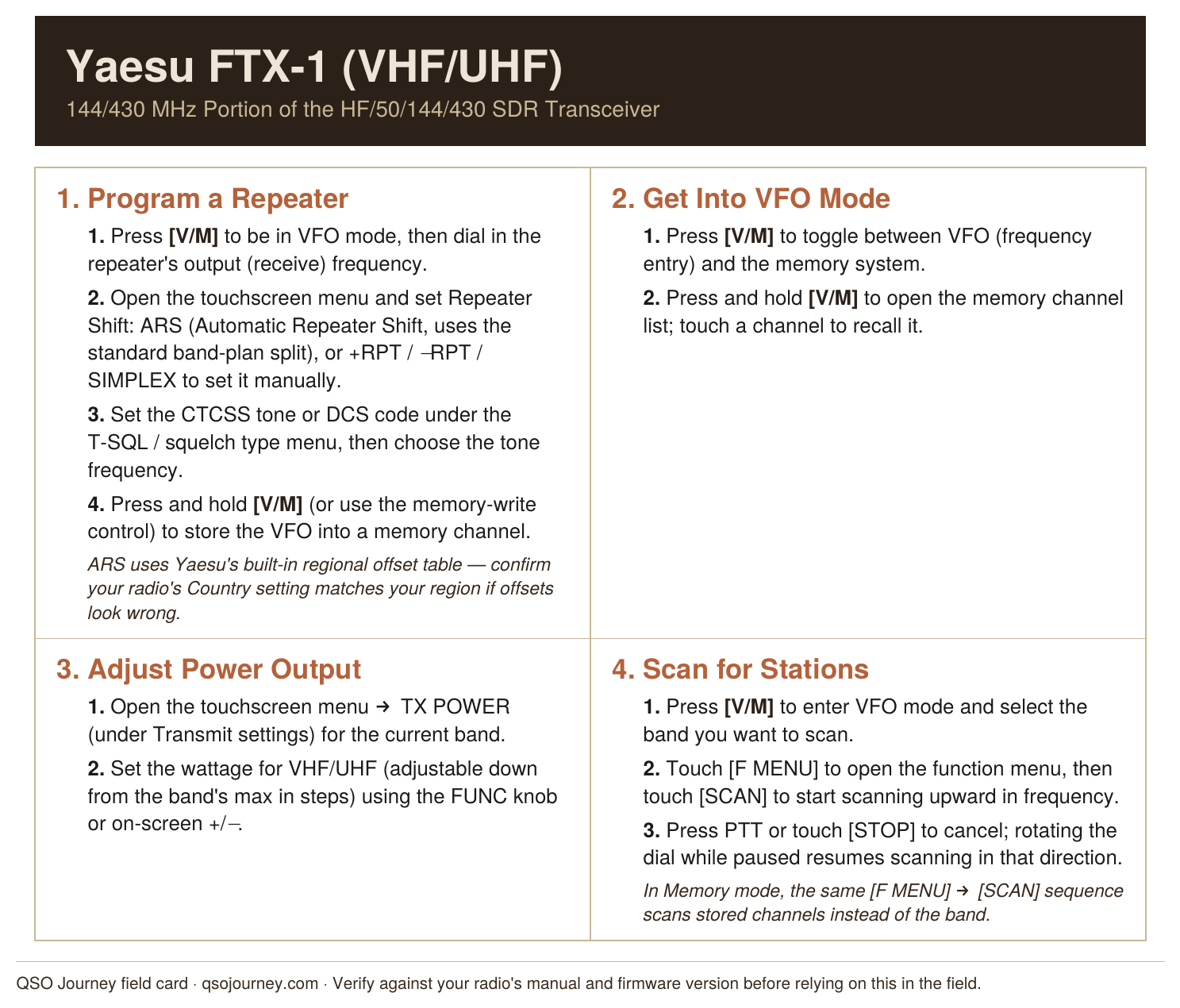
Yaesu FTX-1 (VHF/UHF)
The VHF/UHF side of the touchscreen SDR transceiver. ARS handles repeater offsets automatically off Yaesu’s regional table, and scanning runs through the F MENU rather than a dedicated hardware key. I cover memory channels in more depth in this FTX-1 programming guide, part of The Yaesu FTX-1: The Complete Guide.
As always, treat these as a starting point, not gospel. Menu structures shift between firmware revisions, so double check against your radio’s own manual before you’re relying on it in the field.