
Part of our Handheld Radios (HTs) guide.
I don’t own a UV-5R anymore, and at this point I don’t recommend picking one up. It’s still the radio that got more people licensed and on the air than almost anything else over the last decade, and that matters even with a mediocre receiver. But the market has moved on. For close to the same money there are now handhelds that beat it on receiver performance, ergonomics, feature set, and consistency off the assembly line.
Why it became the default first radio
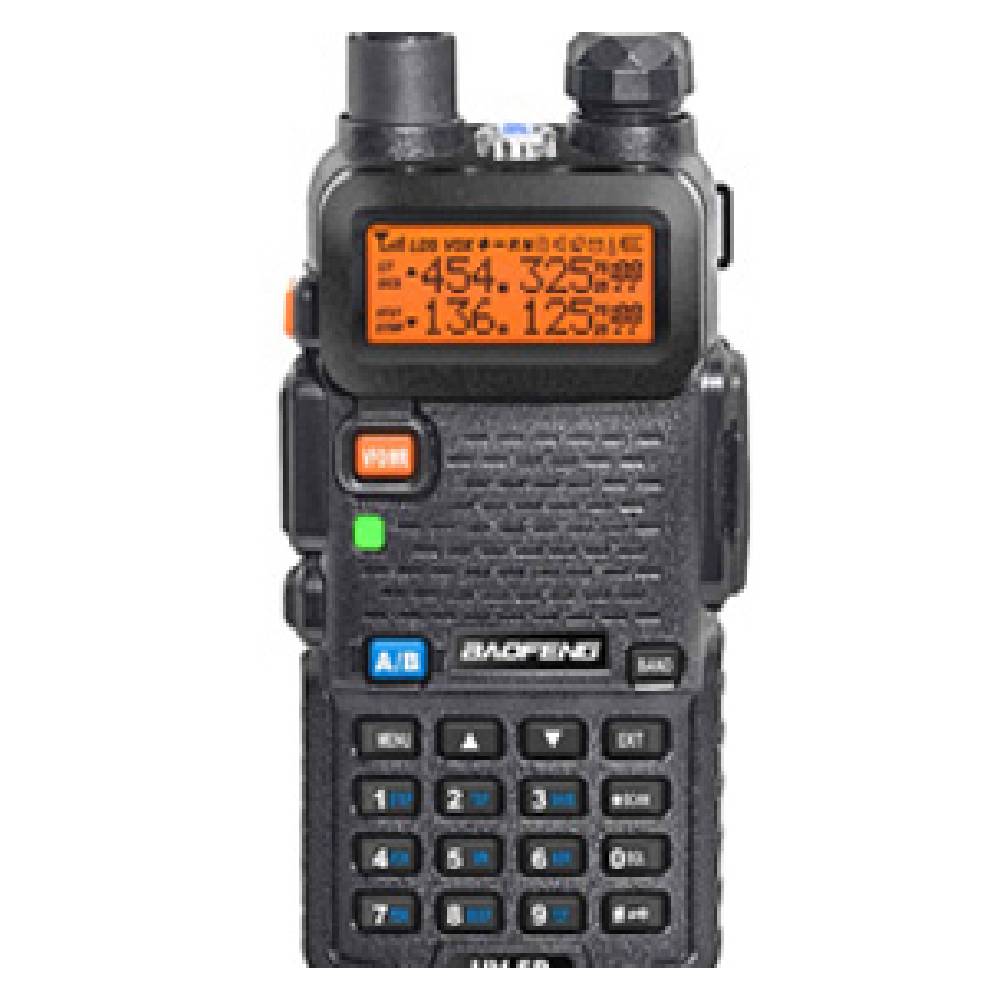
The UV-5R covers 2m and 70cm at up to 4 to 5 watts, runs on a rechargeable Li-ion pack, and has historically sold for well under $30. For a brand new Technician who is not sure the hobby is going to stick, that price point removes basically all the risk. Nobody feels bad if a $20 radio ends up in a drawer. That low barrier to entry is the entire reason this radio, and the long line of near-identical clones it spawned, became the default recommendation in so many licensing classes.
Where it actually falls short
- Receiver selectivity is genuinely poor compared to radios priced slightly more and far worse than something like a Kenwood or Yaesu, and it is prone to intermod and desensitization in RF-dense areas
- The stock antenna is short and inefficient, an easy first upgrade covered in my HT Antenna Upgrades post
- The menu system is famously unintuitive, which is exactly why CHIRP exists and why almost nobody programs one by hand more than once
- Build quality is what you would expect at this price, it is not going to survive a real drop test the way a mil-spec radio will
- Baofeng doesn’t do much for quality control so assembly is sometimes hit or miss and the solder joints are often lacking. This means that some may be dead on arrival, others may work but not be optimal.
Worth knowing before you buy
BaoFeng Tech, the main US-based distributor, has actually discontinued the original UV-5R and now pushes the BF-F8HP as the direct successor, which uses the same body and menu system but improves output power and includes a better antenna. The UV-5R name is still widely available from other retailers and clone manufacturers, but if you are buying new, the F8HP is the more sensible pick for only a little more money. That said, I’d steer you outside the Baofeng lineup entirely at this point; there are better handhelds for close to the same price.
What I’d buy instead
I used to say this was fine as a first radio, a spare for a family member, or a loaner for a club. I don’t anymore. At this price range there are options with better receivers, better ergonomics, and none of the hit-or-miss quality control Baofeng is known for. Check my Handheld Radios (HTs) guide and Six Handheld Radios Compared for where I’d point someone today.
Programming one for the first time? CHIRP makes it painless, see CHIRP: Free Programming Software for Your Handheld Radio.
Programming by hand instead of CHIRP? Grab the UV-5R field card for the menu-number cheat sheet on repeaters, VFO mode, power, and scan.