
Part of our Handheld Radios (HTs) guide.
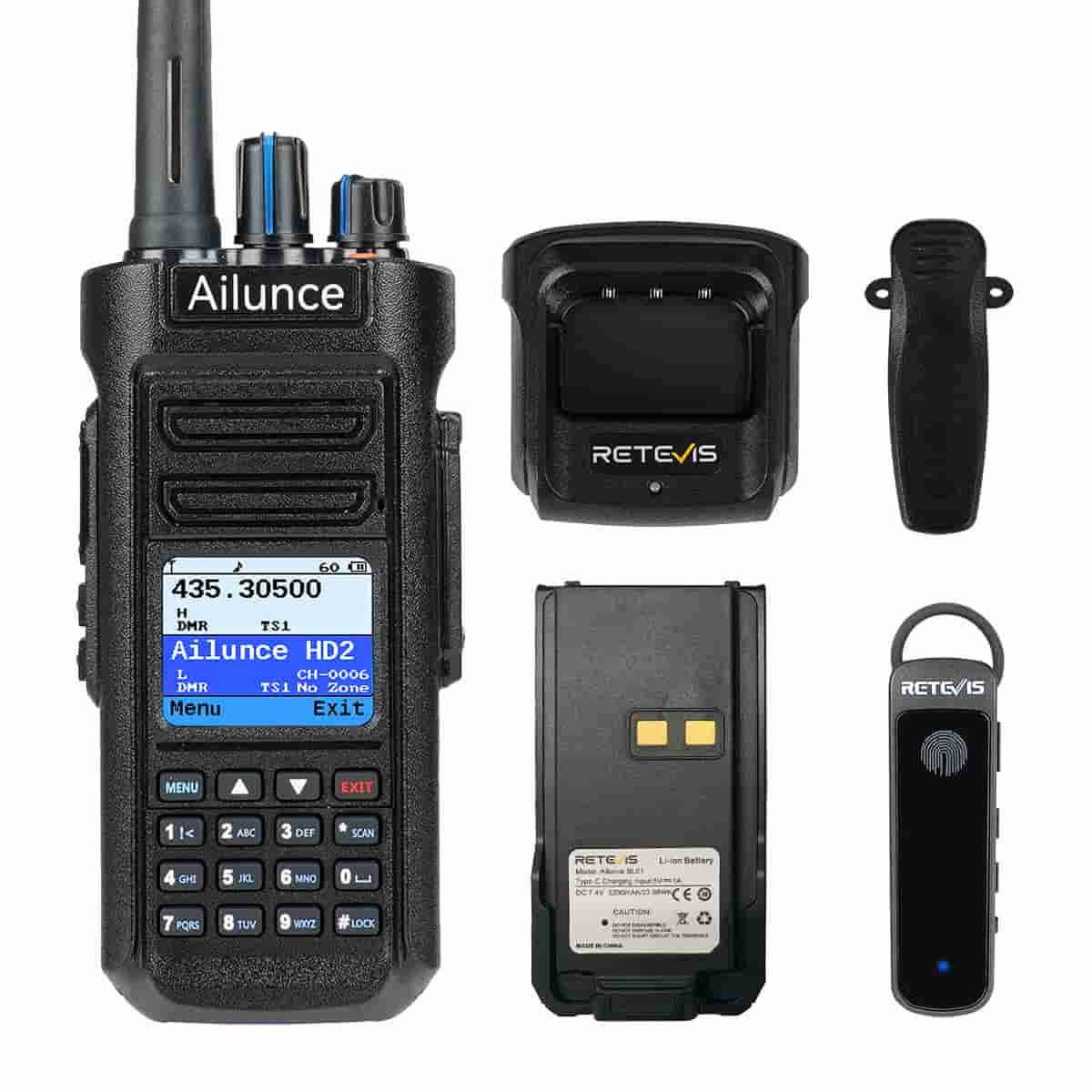
I own quite a few Ailunce HD2 radios, and they are not for my own daily carry, they are preprogrammed and set aside as handout radios for EmComm and SHTF scenarios. If I need to hand a family member or a group member a radio that just works, analog or digital, with encryption available if we need it, this is what comes out of the closet. But before you buy a batch of these for the same purpose, there is something you need to know, and I am not going to bury it at the bottom of the post.
What the HD2 Gets Right
- Dual-band analog and DMR digital voice on 2m/70cm
- AES-256 encryption, which is why these are my go-to handout radios for sensitive comms
- A straightforward menu structure that is easy to hand to someone with no radio experience
- Rugged build that has held up fine to being stored, handed out, and stored again
For a preprogrammed, set-it-and-forget-it handout radio, the feature set genuinely fits the job. Encryption plus digital and analog flexibility in one radio at this price point is hard to beat on paper.
The Warning: Documented Spurious Emissions
Here is the part I want to be direct about. Multiple independent tests on HD2 units, using spectrum analyzers like a TinySA and lab-grade gear, have found the radio failing spurious emissions testing on 2m, with harmonics and other out-of-band emissions well above what is acceptable. Some owners have reported that even after Ailunce’s firmware updates, the problem persisted on their units. That means when you key up, you are not just transmitting cleanly on your intended frequency, you may be putting out meaningful power on frequencies you never intended to touch, which can interfere with other services and is not something a firmware patch alone reliably fixes.
I go into the technical side of why this matters in What Is a Spurious Emission, and Why Should You Care?, but the short version is that this is not a nitpick, it is a real compliance and courtesy issue. If you already own HD2 units, it is worth testing yours or watching for independent test results on your specific firmware revision before you rely on them for anything important. If you do not already own one, this is the single biggest factor to weigh before buying.
Other Things to Know
Some units ship without the North American band plan set correctly out of the box, and getting the CPS software and firmware update process to cooperate has been hit or miss depending on the batch. Battery life is also on the shorter side, particularly with Bluetooth left on. None of this is a surprise for a budget import radio, but combined with the emissions issue, it means these are not radios I would put in front of a new ham as their first purchase.
Why I Still Use Them as Handout Radios
For me, these stay in the closet, preprogrammed, ready to hand out only when needed rather than in daily rotation. That is a very different use case than an EDC or primary handheld, and it is part of a bigger conversation about what a real communications plan looks like, which I cover in What a Real SHTF Communications Plan Actually Looks Like. If you are building out a similar handout radio setup, I would encourage you to test each unit’s transmit cleanliness yourself before you trust it, rather than assuming every unit off the shelf performs the same.
One place these earn their keep despite the caveats above: preprogrammed handout radios wired into hearing-protection headsets for a tactical kit. If that is a setup you are building out, I walk through wiring one of these into a Peltor ComTac headset step by step.
The Verdict
The HD2 has real strengths for the specific job I use it for, encrypted, digital-capable handout radios that do not need to be anyone’s primary rig. But the spurious emissions reports are serious enough that I cannot give this radio an unqualified recommendation. If you buy them, test them, and go in aware of what independent reviewers have found.
Preprogramming a batch of these as handout radios? The HD2 field card covers repeater programming, VFO mode, power, and scan for anyone you hand one to.