
Part of our Handheld Radios (HTs) guide.
Hearing protection and comms are two problems that get solved together in a tactical kit, not separately. Fumbling a separate earpiece and a radio mic while you are also trying to hear what is going on around you is a good way to miss both the call on the radio and the sound behind you. A ComTac style headset with a PTT wired into your radio solves both at once: electronic hearing protection that also carries your radio audio and lets you key up without letting go of anything.
You can build this exact setup around almost any handheld, ham, GMRS, DMR, or commercial. I am going to walk through my own kit end to end, but the pattern underneath it, radio, radio-specific adapter, PTT, headset, is universal. Swap out any single piece for whatever you already own, as long as the connectors on each end actually match.
The Four-Piece Chain
Every radio-to-headset setup like this breaks down into the same four links:
- Radio, the source of the signal, whatever handheld you actually run
- Radio adapter, converts your radio’s proprietary connector to a standardized mil-spec connector
- PTT unit, the push-to-talk box that clips to your vest or belt and bridges that mil-spec connector to your headset
- Headset, the ComTac or other tactical headset that plugs into the PTT and delivers both hearing protection and radio audio
Once you understand why each piece exists, swapping any one of them out for a different brand or model is straightforward. Here is my own version of the chain.
My Setup, Piece by Piece
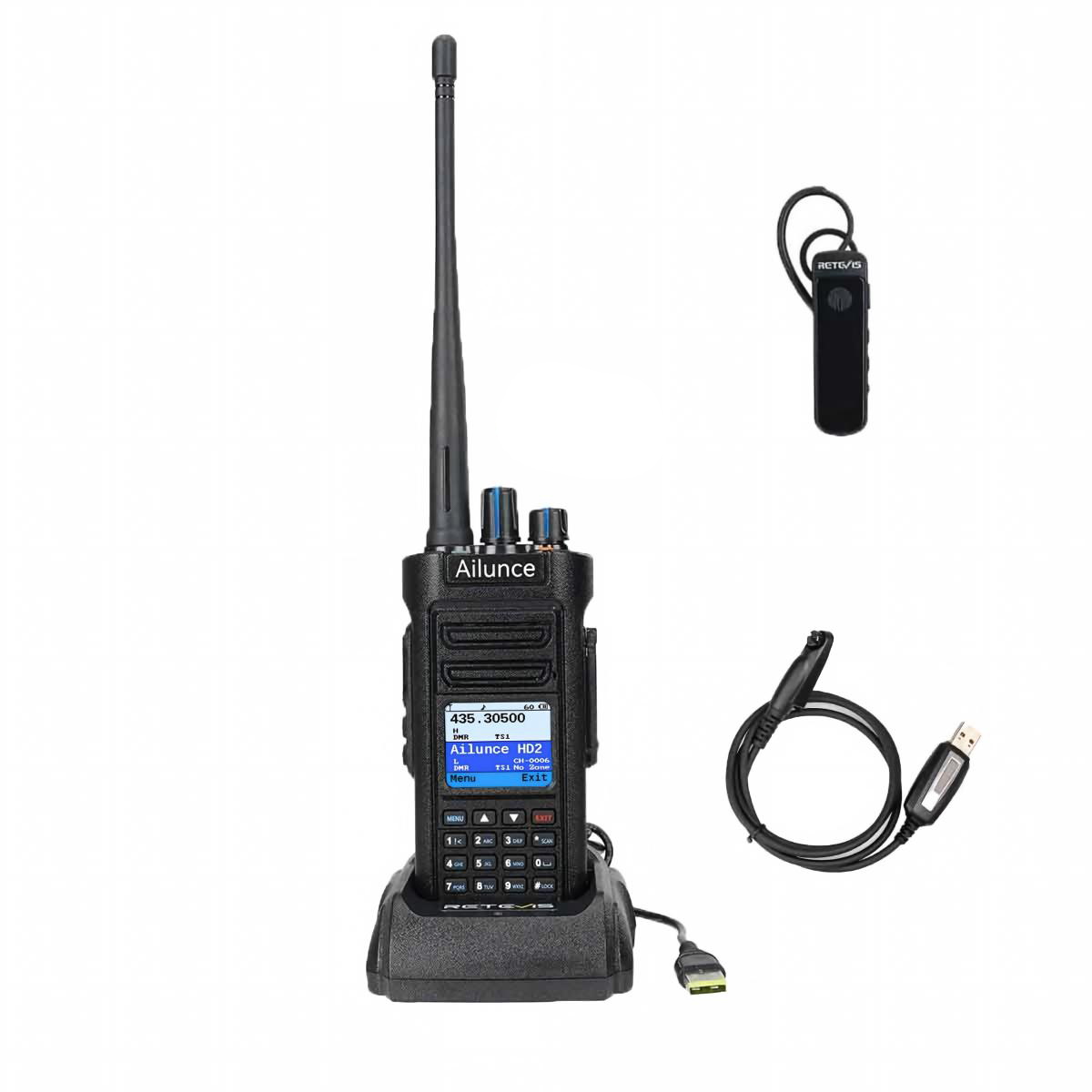
Radio: Retevis HD2
I run the Retevis HD2 10W GPS Bluetooth Dual Band DMR Radio. This is the same radio I have written about before under its ham-radio branding, Retevis sells the commercial version and Ailunce sells the amateur version, same hardware either way. I have a full write-up on it, including a real concern worth knowing about before you build a whole kit around one, in my Ailunce HD2 review. Read that first if you have not already, it applies just as much to the Retevis-branded HD2 since it is the identical radio.
Adapter: CommGearSupply Tactical Radio Adapter
The HD2 has its own proprietary 2-pin radio jack, not a mil-spec connector, so I use CommGearSupply’s Tactical Radio Adapter/PTT for Headset with Quick Disconnect (Hirose) to bridge the two. This adapter plugs directly into the HD2 (it is also listed as compatible with the Ailunce HD1, Retevis RT-series, HYT, and several Motorola models) and converts that connector to the NATO U-229/U-329 mil-spec standard, the same family of connector used by MIL-C-55116 gear. This is the piece that lets a commercial radio talk to genuinely military-grade headset hardware.

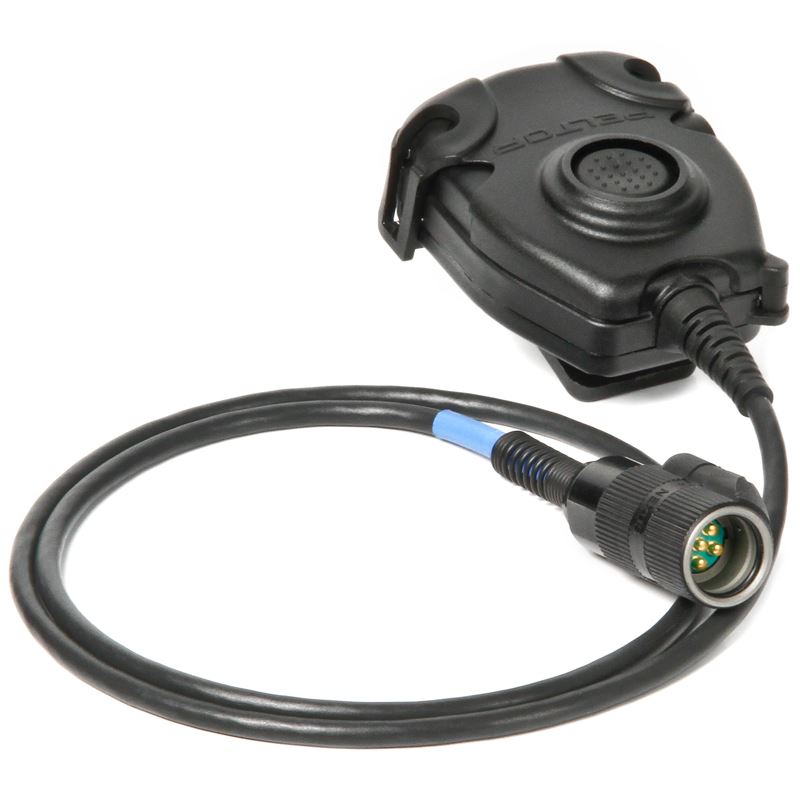
PTT: 3M Peltor FL5601-02
For the actual push-to-talk unit, I use the 3M Peltor Push-To-Talk Adapter for Radios with a MIL-C-55116 Connector. This PTT is built for radios that already have a 6-pin MIL-C-55116 port, which is exactly what the CommGearSupply adapter gives the HD2. It clips to a vest or belt, has a glove-friendly button with an optional shroud to prevent accidental keying, and uses a NEXUS TP-120 breakaway connector on the headset side, meaning it pops free cleanly if you get snagged instead of putting stress on your neck or the headset itself.
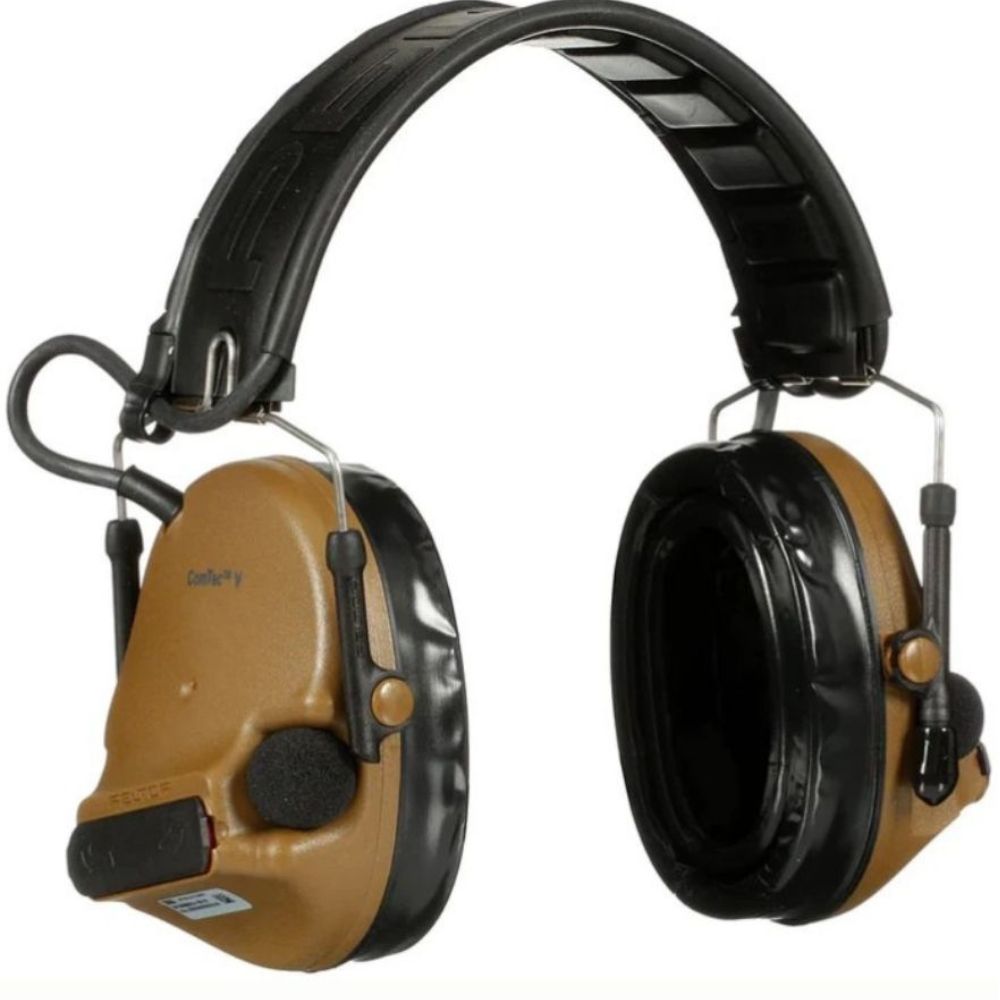
Headset: Peltor ComTac V
The headset itself is the Peltor ComTac V. One thing to watch for when you order one of these: you need the Single Comm or Dual Comm lead option, not the Hearing Defender (no lead) version. The no-lead option is hearing protection only and will not connect to a radio at all without an additional workaround. Single Comm gets you one radio connection, Dual Comm gets you two, useful if you are running a primary and a backup radio at the same time.
Why Not Just Plug the Radio Straight Into the Headset?
Because almost nothing lines up connector for connector. Tactical headsets like the ComTac line are built around a standardized NATO/NEXUS connector so they can work across a whole ecosystem of PTTs and radios. Commercial and ham handhelds, on the other hand, almost always use the manufacturer’s own proprietary 2-pin or multi-pin jack. The adapter is the piece that translates between those two worlds, and it is also the piece that changes depending on exactly which radio you own. That is the one part of this chain you cannot treat as universal.
Picking Your Own PTT
The FL5601-02 is one option among many. 3M alone makes a whole family of PTT adapters for different radio connectors, and there are other manufacturers too. The part that actually matters is making sure the connector on the radio side of your PTT matches what your adapter outputs, and the connector on the headset side matches what your headset expects. Get either end wrong and nothing downstream of it will work, no matter how good the individual pieces are. CommGearSupply in particular carries adapters for a huge range of radio and headset combinations, so if your gear does not match what I am running, that is a good place to start looking for the specific adapter your setup needs rather than assuming one adapter fits everything.
A Few Setup Tips
- Test the whole chain at home before you rely on it in the field. Key the radio and confirm you can hear it through the headset, then key the PTT and confirm the radio actually transmits.
- Check the actual connector, not just the brand name. Some manufacturers have used more than one connector standard across different product generations, so confirm what is printed on your specific gear or listed in the product description before you order an adapter.
- Route the cable with some slack and secure it so it cannot snag on gear or get pulled taut during movement.
- Carry spare batteries for both the radio and the headset. A dead battery in either one is the most common reason a setup like this goes quiet, and it has nothing to do with how good your adapter chain is.
How This Fits Into a Bigger Comms Plan
A headset and PTT setup is one piece of gear, not a communications plan on its own. If you are building this out as part of a broader kit, I would read Tactical Team Comms vs. SHTF Comms next, since the gear you need genuinely differs depending on which of those two situations you are actually planning for. And if the HD2 is going to be your radio of choice for this kind of kit, take a look at how it sits alongside the rest of my handhelds in the Handheld Radios (HTs) guide.
The Verdict
Once you understand the four-piece chain, radio, adapter, PTT, headset, this setup is easy to replicate with whatever gear you already own. The only piece you really have to research carefully is the adapter, since that is the one link tied specifically to your radio. Get that piece right and the rest of the chain is plug and play.