

Part of our Handheld Radios (HTs) guide.
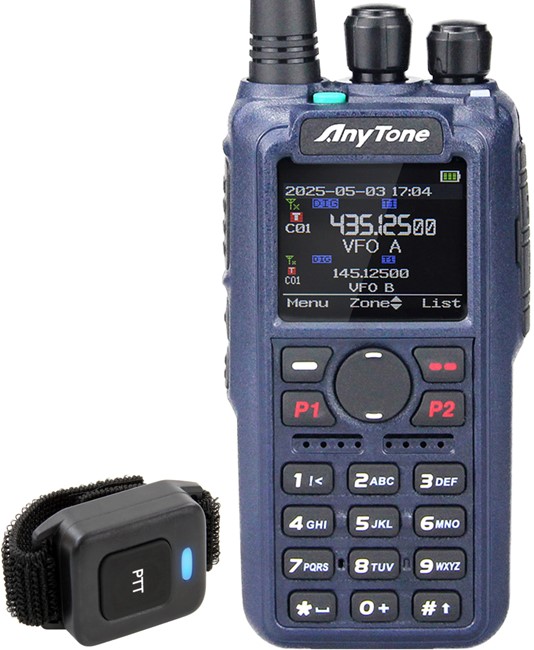
If the Kenwood is my travel radio, the AnyTone AT-D890UV is my everyday one. This is what rides on my belt around the house and what I grab first when I am just stepping outside for a few minutes. It does not have the wideband receive of the D75A, but for day to day carry it does not need it, what it needs to do is everything else, and it does that better than any other handheld I own.
Why It Is My EDC Radio
The 890 takes the formula that made the AT-D878UV II Plus such a runaway favorite and adds the features people had been asking for. It is dual-band DMR and analog on 2m/70cm, with true VFO functionality so you are never locked into pre-programmed channels only.
- 4,000 channels, 10,000 talkgroups, and a 500,000-contact capacity, far more than most competing radios offer
- 7W output on VHF, with adjustable power steps
- True dual receive on separate dual power amplifiers
- Air band AM receive and cross-band repeat
- Bluetooth PTT that is actually implemented well, one of the few handhelds in this class that gets it right
- Full GPS/APRS transmit and receive
- AES-256 encryption
- A hard power switch, so there is no parasitic battery drain when it sits in a drawer for weeks
That combination, DMR, analog, APRS, and encryption, in one radio is what makes it my “all things” HT. I do not need to think about which radio to grab for which task, this one covers almost all of them.
Where the BridgeCom Maverick Fits
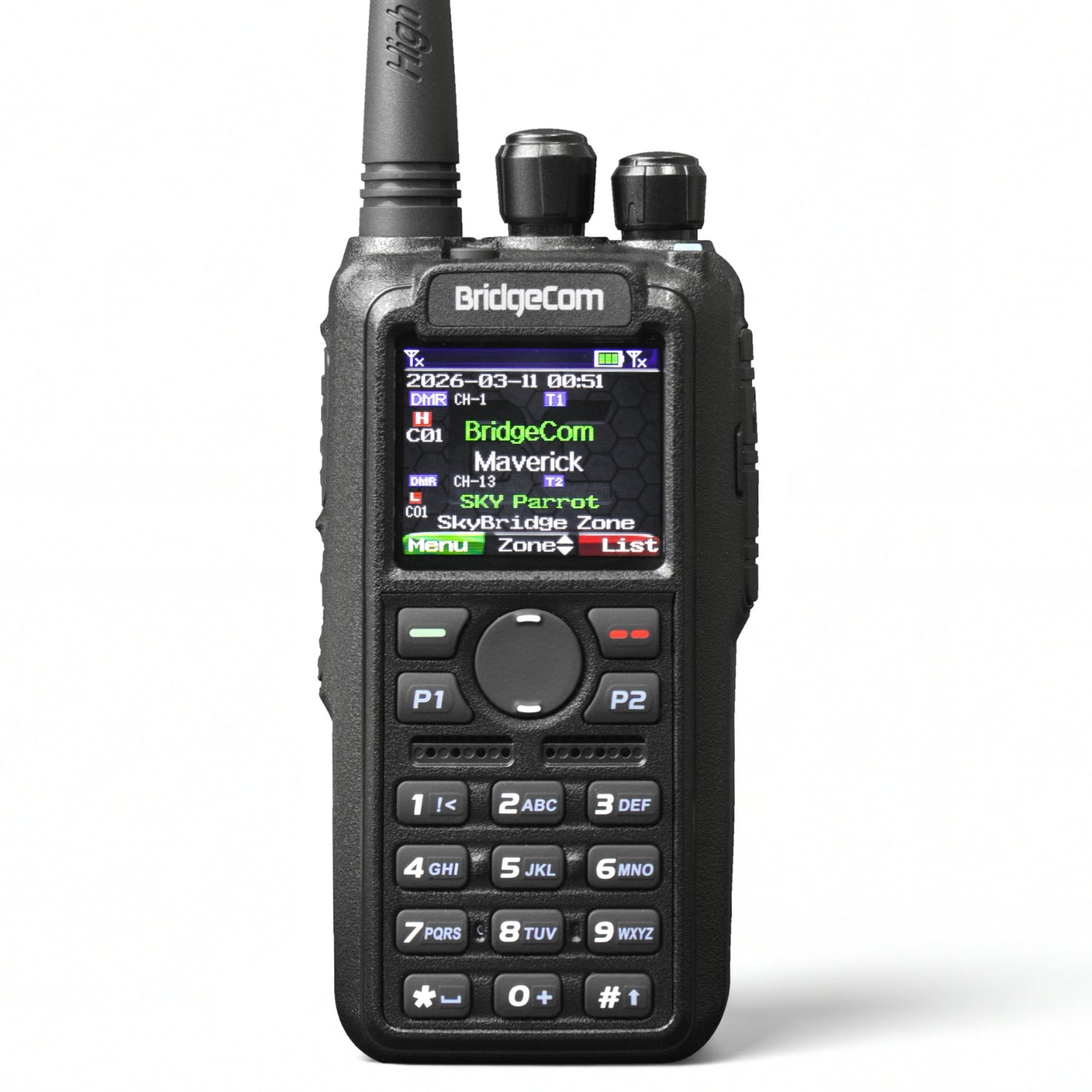
Worth knowing if you are shopping this class of radio: BridgeCom Systems, one of the biggest names in DMR training and support, sells its own version of this radio called the Maverick. It shares the same core foundation as the AT-D878UV II Plus, but adds cross-band repeat, air band receive, recording, companded audio, and satellite communication support on top. Spec for spec it is a genuine competitor to the 890, and if you want BridgeCom’s training and hotspot codeplugs bundled in, it is a solid way to go. I go into more detail on how the Maverick and the rest of the field compare to the 890 in Why the AnyTone AT-D878UV II Plus and AT-D890UV Are Still the Radios to Beat.
Getting the Most Out of It
If DMR is new to you, I would start with Getting Started with DMR before you touch the codeplug, and once you are ready to build your own channel list, Building Your First DMR Codeplug walks through it step by step. If you want your own hotspot instead of relying on a Brandmeister or TGIF repeater near you, Building a DMR Hotspot with a Raspberry Pi covers Pi-Star versus WPSD.
The Honest Downsides
The receive range does not compete with a wideband scanner-style radio, it is not built to and I do not expect it to, that job belongs to my TH-D75A. Scanning is also on the slower side compared to some of my other handhelds. The codeplug software is not the most intuitive thing to learn on day one, plan on spending real time with it the first time you sit down to program the radio. None of these are dealbreakers for me, but they are worth knowing going in.
The Verdict
The AT-D890UV is the radio I would replace first if it broke, and that alone tells you how I feel about it. DMR, analog, APRS, and encryption, all in a handheld with real Bluetooth and battery life I can trust to still have a charge when I grab it, that is exactly what I want in an everyday carry radio.