Part of our Building Your First Ham Radio Station guide.
Chameleon MPAS 2.0 Review: Field-Ready Construction Meets Heavy Performance Trade-Offs
If you spend any time browsing HF portable gear, you’ve almost certainly run into the Chameleon MPAS 2.0 (Modular Portable Antenna System). Marketers pitch it as the ultimate “go-bag” solution: dead simple to deploy, ruggedly built, and capable of tuning across 160 through 6 meters without needing a complex setup.
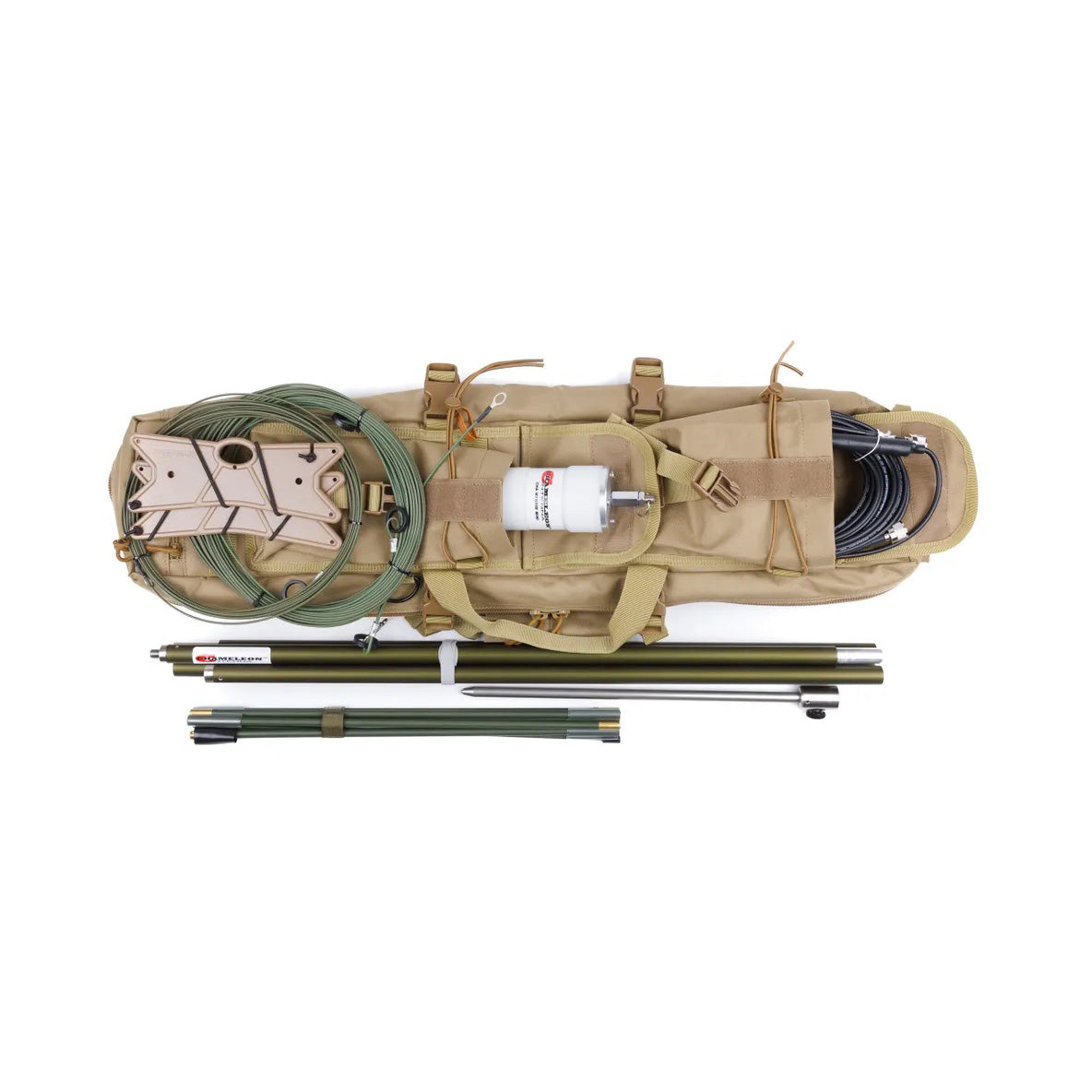
It sounds like a dream for SOTA, POTA, or emergency response. But after real-world field testing, the truth is more nuanced. While the MPAS is undeniable in its ease of use and physical durability, those advantages come with significant trade-offs in efficiency, cost, and weight that every operator should understand before shelling out their hard-earned cash.
The “Easy Tune” Trap: Broadband Convenience vs. Actual Performance
Let’s start with the big marketing highlight: it’s broadband and incredibly easy to use. You set up the hybrid matching unit, screw on the whip, plug in your coaxial cable, and your radio’s internal tuner (or even an external one) gets a low SWR almost instantly.
However, a low SWR does not automatically mean a great signal.
The MPAS relies heavily on transformer loss and resistive matching to present that friendly match to your rig. In short: it is a very lossy antenna system.
- Signal-to-Noise Ratio (SNR): Because much of your transmitted power is converted to heat in the matching network rather than radiated into the ether, your transmitted signal will be noticeably weaker compared to a tuned dipole, End-Fed Half-Wave (EFHW), or full-size vertical.
- Reach: If you’re trying to bust through a pileup or work weak DX, you’ll quickly notice the difference. Your reach will be significantly less than what you’d achieve with almost any other antenna style operating at the same power level.
It’s a classic trade-off: you get lightning-fast deployment across multiple bands, but you sacrifice a substantial chunk of your RF energy to get it.
The Radial Reality: One Wire Isn’t Enough (and Upgrades Cost You)
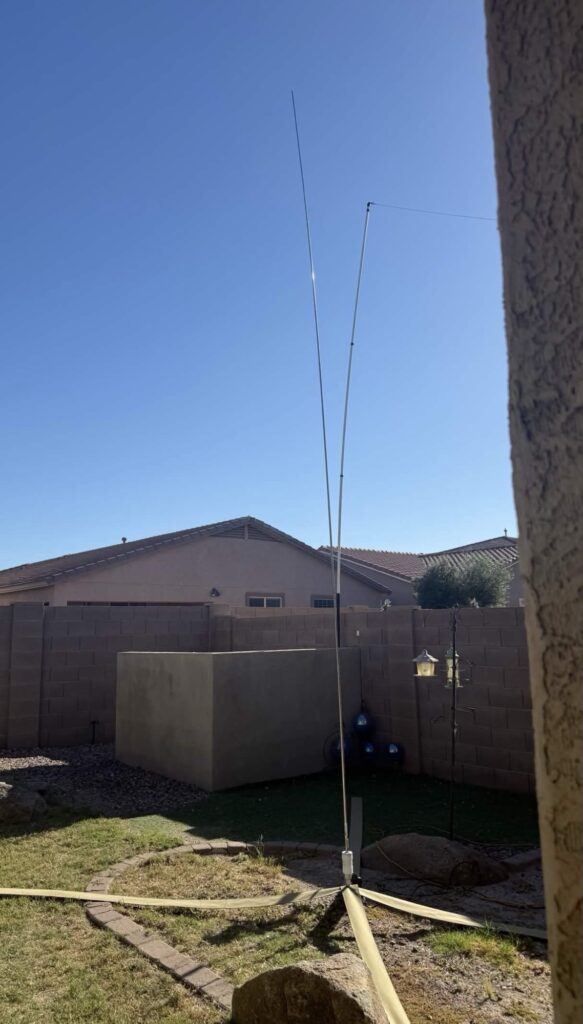
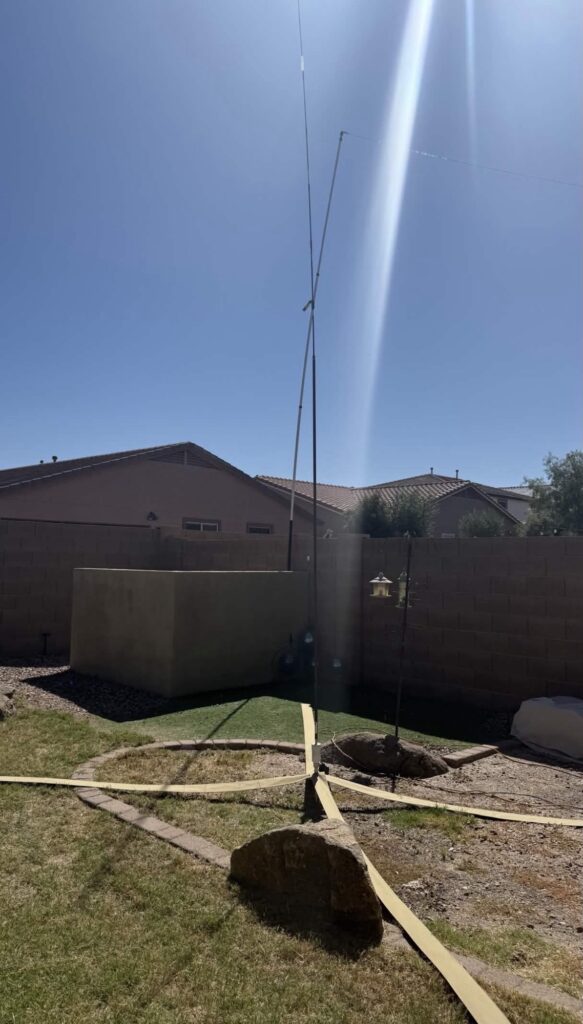
Out of the box, the MPAS ships with just a single radial wire.
For a vertical system, a single counterpoise is simply not sufficient to establish a good ground plane. Operating with only one radial limits performance even further and can lead to RF in the shack or unstable tuning depending on ground conditions.
To get acceptable performance out of the system, you are forced to make a choice:
- Add additional radial wires: You can make or buy extra radials, which adds a minor extra expense and a bit more clutter to your setup.
- Buy Chameleon’s “Faraday” ground strips: These offer a compact, lay-flat alternative, but they come with a hefty price tag that pushes an already expensive antenna package even higher and they take up quite a bit of space for storage / transportation, so they aren’t something I would recommend for a POTA / SOTA deployment.
Either way, budget on spending extra time and money to get the ground side of this antenna up to par.
The Whip Breakdown: 17′ Collapsible vs. MIL Whips
Chameleon offers a few different vertical elements for the MPAS, and choosing the right one depends entirely on how much weight and pack space you’re willing to carry.
The Standard 17′ Telescopic Whip
- The Good: Appears surprisingly sturdy and deploys quickly and easily.
- The Takeaway: It offers a great balance of height, ease of deployment, and light weight for standard portable operations.
The MIL Whip & MIL Extension
- The Good: Built like an absolute tank. These shock-corded aluminum section whips are VERY sturdy, rock-solid in high winds, and deploy in seconds with a simple shake.
- The Catch: They add a significant amount of weight to your kit compared to the 17′ collapsible whip itself. Even worse, even when folded up, they take up far more pack space than a neat 17′ collapsible whip. If you are backpacking or trying to pack light, the extra bulk of the MIL whip system will be immediately noticeable.
The Verdict
The Chameleon MPAS 2.0 is a compromise tool. If your primary goal is rapid, zero-fuss deployment in harsh conditions where you just need to get on the air fast, its build quality and broadband nature deliver.
However, go in with your eyes open: you are trading away raw signal strength, SNR, and reach for that convenience. Factor in the immediate need to upgrade your ground counterpoise system and the extra pack weight if you opt for the MIL whip setup, and it becomes clear that the MPAS is a specialized tool, not a magic bullet for HF portable operating.
I don’t hate the chameleon, in fact I like it a lot, but the price point for it is just to damn high for how lossy it is. For 1/3 the price you can setup a hydra and a 17’ whip and have better performance. The only issue is that the hydra does require you to adjust the whip length as you change bands vs the chameleon which is broadband and doesn’t require adjustments.
For the full rundown of everything I’ve bought in the Chameleon ecosystem, and why the MPAS is far from the only piece I have complicated feelings about, see Chameleon Antennas: My Honest Thoughts After Spending Thousands of Dollars.
So the question is, is a stronger signal that reaches out further and clearer but requires adjustments as you change hands better for your situation? Or is a single antenna that performs probably 30% worse, but doesn’t require adjustments, better?