
Part of our Building Your First Ham Radio Station guide.
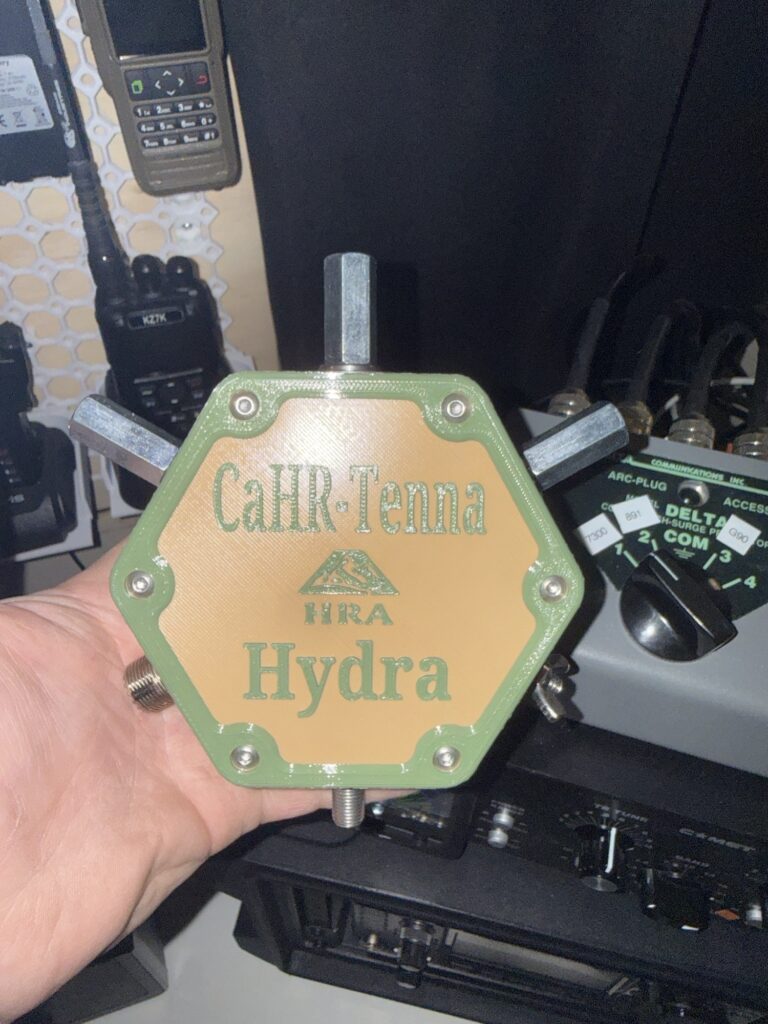
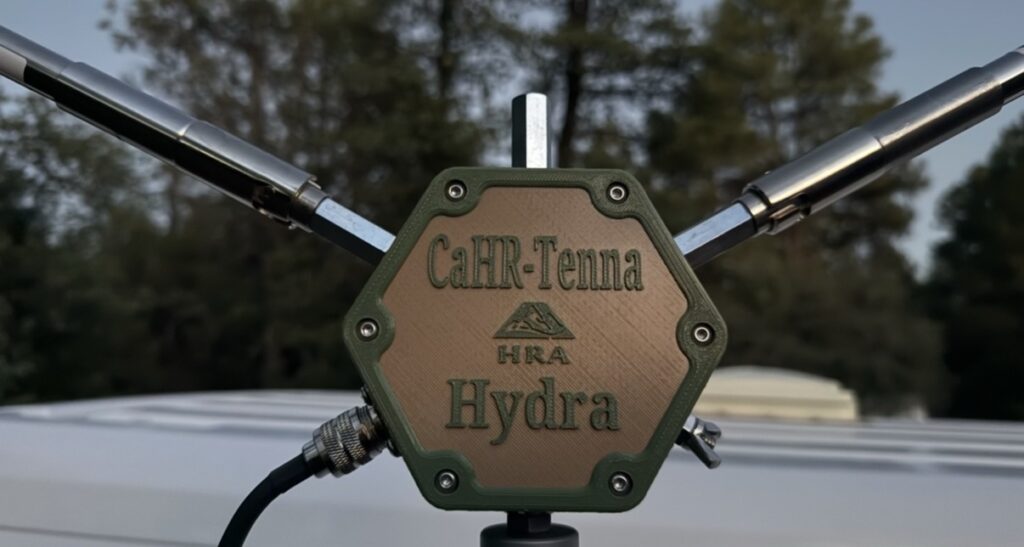
I picked up the CaHR Hydra a few months ago and started with the easy stuff: testing it at the house, first as a dipole and then as a vertical. Both times I fed it with Chameleon 17 ft whips as the elements. It was easy to deploy and performed well right out of the gate, but backyard testing only tells you so much. What actually sold me on this antenna was taking it up to the mountains for an overnight operating session.
First impressions at home
Running it as both a dipole and a vertical in the backyard, using Chameleon’s 17 ft and 25 ft whips, gave me a good baseline. Setup was straightforward each time, and performance was solid enough that I was already looking forward to taking it somewhere more interesting.
The real test: an overnight in the mountains
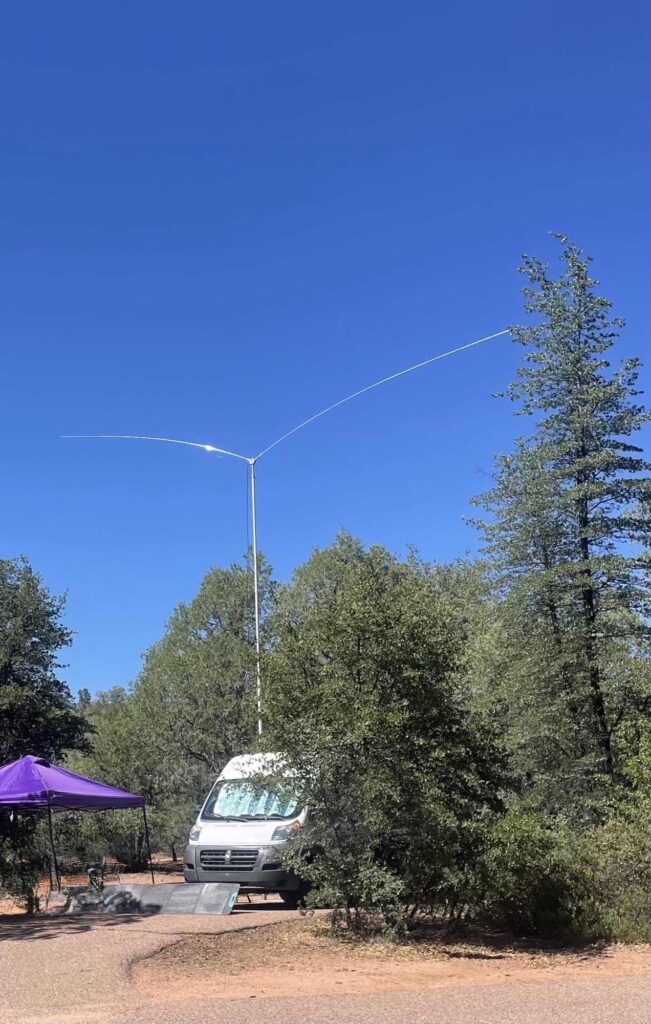
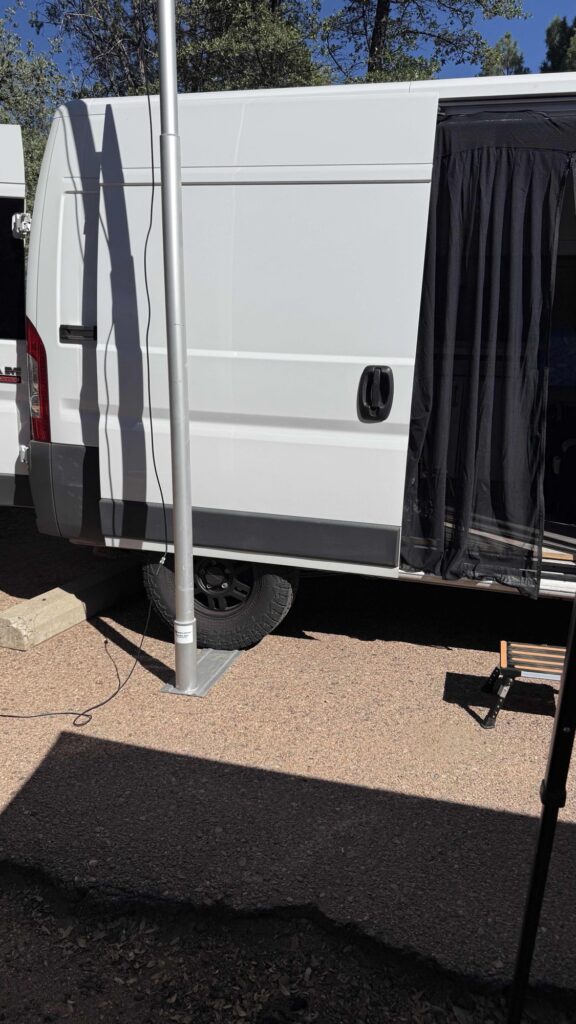
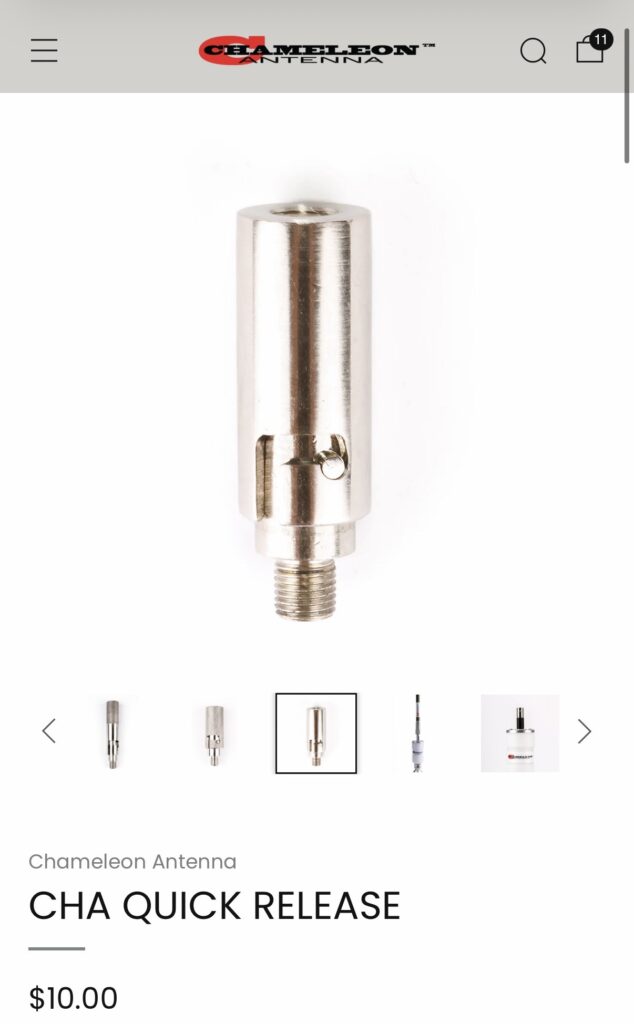
For the mountain trip, I mounted the Hydra on my 25 ft Chameleon Porta Mast, held up with the drive-over base rather than staking it in. I extended the 17 ft whips nearly all the way out, and used Chameleon’s QD (quick-disconnect) attachments to make installing the whips easier, since the mast sits pretty tall even fully collapsed and you’re working at height to get everything connected.
Once it was up, it went together quickly and performed just as well as it had at home, arguably better, given how much more the setting mattered. It also turned out to be quite the conversation piece: more than a few people out on their own hikes stopped to ask what exactly they were looking at.
Bottom line
The backyard tests told me this was a capable, easy-to-deploy antenna in both dipole and vertical form. The mountain overnight told me it’s actually a great field antenna, quick to set up even at height on a tall mast, and reliable enough that I wasn’t second guessing it after dark. It’s earned a permanent spot in the rotation for trips where I want something more capable than a basic wire but don’t want to haul a full beam. If you’re weighing it against the competition, see What I’d Buy Instead of the Chameleon MPAS 2.0 for how it stacks up on price and performance, or my honest take on the Chameleon ecosystem for the full picture.