
Part of our Emergency Communications and Preparedness guide.
Why these two radios have become a favorite combination for many new hams that are focused on emergency communications, off-road adventures, and ATAK.
For years, ham operators have had to choose between a capable handheld and a powerful mobile radio. While that still makes sense, BTECH has done something different with the UV-PRO handheld and UV-50PRO mobile radio.
Instead of simply being two radios that happen to work together, they’re designed as an ecosystem.
If you’re looking for a radio setup that transitions seamlessly from your truck to hiking trails, search and rescue operations, emergency communications, or simply chatting on your local repeater, this combination deserves serious consideration.
Meet the Team
BTECH UV-PRO
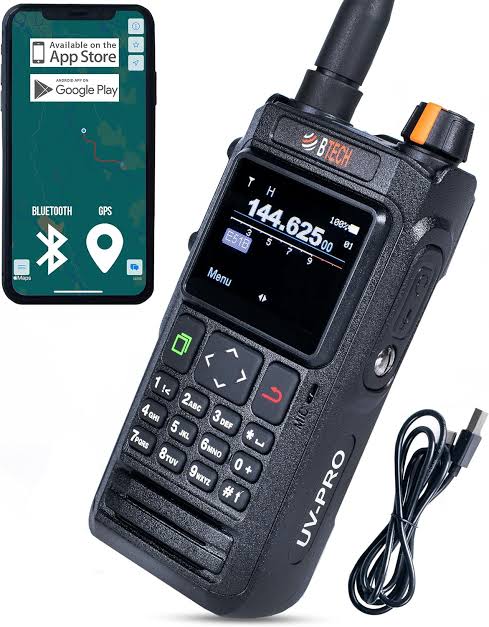
The UV-PRO isn’t just another dual-band handheld.
It includes features that were traditionally found only in much more expensive radios:
- Dual-band VHF/UHF
- Built-in GPS
- APRS
- Bluetooth
- IP67 waterproof construction
- USB-C charging
- Smartphone programming
- Text messaging between compatible radios
- Position sharing
- Digital data capabilities for compatible applications like ATAK
BTECH UV-50PRO
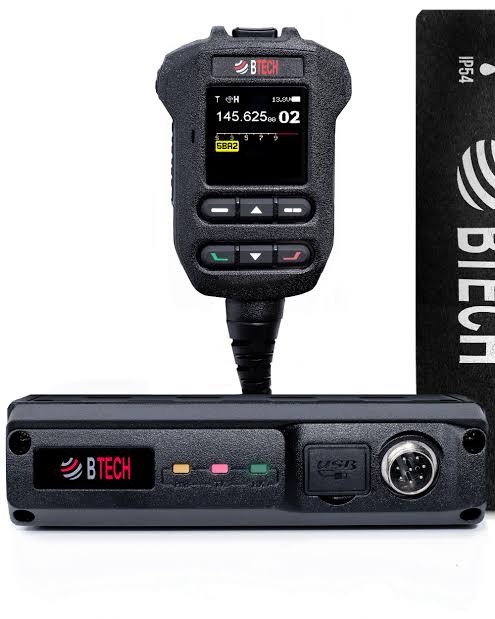
The UV-50PRO is the mobile counterpart.
It offers:
- Up to 50 watts of output power
- Bluetooth microphone support
- GPS
- Smartphone connectivity
- APRS
- Data support
- Companion app programming
- Remote-style operation through its Bluetooth accessories
Think of it as a UV-PRO with significantly more transmit power and a much better antenna system in your vehicle.
Worth knowing before you buy: both radios have close VGC-made siblings. The UV-PRO is BTECH’s badge-engineered version of the VGC VR-N76, close enough that setup guides and accessories are largely interchangeable between the two. I run two VR-N76 units myself for off-roading and Jeep trips, and the choice between the BTECH and VGC branded handhelds really comes down to price, color options, and which company’s support you’d rather deal with, not any meaningful difference in the radio itself. The UV-50PRO has a similar cousin in the VGC VR-N7500, a headless, phone-controlled mobile that shares the same firmware lineage and app ecosystem. I haven’t run the N7500 myself, so take that one as informed rather than firsthand, but don’t be surprised to see it pop up as essentially the same hardware under a different badge. For a closer look at the handheld side of this, see my VGC VR-N76 vs BTech UV-Pro review.
Why These Radios Pair So Well
Most mobile and handheld radios are completely independent.
These aren’t.
Because they share the same software ecosystem and communication features, moving between your vehicle and handheld feels surprisingly seamless.
For example:
- Program both radios from your phone
- Share channel plans
- Use GPS features on both
- Exchange position information
- Send text messages
- Maintain similar user interfaces
- Integrate with ATAK
Once you’ve learned one radio, the other feels immediately familiar.
Vehicle Range vs Handheld Range
One of the biggest differences is simple physics.
The UV-PRO is typically running:
- 5–7 watts
- Rubber duck antenna
The UV-50PRO can provide:
- Up to 50 watts
- External roof-mounted antenna
- Better ground plane
- Improved receive performance
That means:
- Better simplex coverage
- Stronger repeater access
- More reliable communications in rural areas
- Greater performance while traveling
When you’re inside your vehicle, there’s almost no reason not to use the mobile radio.
Why the UV-50PRO Makes a Great Base at Camp
One of my favorite ways to run this pairing is leaving the mobile radio at camp as a strong fixed station while I carry the handheld out on foot.
Imagine this scenario:
You’re camping.
Your truck is parked at camp with the UV-50PRO connected to a high-gain antenna.
You grab your UV-PRO and head out hiking.
To be clear, neither radio does cross-band repeat. The UV-50PRO won’t automatically relay your handheld’s transmissions on its own. What it does give you is a much stronger fixed station: with 50 watts and a roof-mounted antenna, it can hear and reach farther than the handheld alone, so if someone stays with the truck, they can monitor and relay traffic manually between your UV-PRO and the outside world.
This is incredibly useful for:
- Camping
- Off-roading
- Overlanding
- Field Day
- Public service events
- Search and Rescue
- Large properties
It’s not a repeater, but a strong, well-antennaed base station at camp gives you options a handheld alone can’t match. My Grab and Go Box is a real-world version of this idea, a Pelican case that pairs a UV-50PRO base station with four APRS handhelds for the whole family.
ATAK Integration Changes Everything
One of the biggest reasons these radios have generated so much excitement is their compatibility with ATAK (Android Team Awareness Kit).
Using Bluetooth, compatible software can exchange data between the radio and ATAK, enabling features such as:
- GPS position sharing
- Team tracking
- Messaging
- Situational awareness
- Coordinate sharing
- Voice communications alongside mapping capabilities through compatible plugins
For:
- Search & Rescue
- CERT teams
- Off-road groups
- Preparedness organizations
- Event coordination
this opens up capabilities that were once reserved for much more expensive commercial systems.
What They’re Great At
These radios really shine in several situations.
Daily Carry
The UV-PRO is rugged enough to become an everyday handheld.
Its waterproof construction means you don’t have to panic when the weather turns bad.
Mobile Operations
The UV-50PRO is an excellent daily driver radio.
Bluetooth support reduces cable clutter, while the higher transmit power makes repeaters much easier to reach.
Emergency Communications
Because both radios share GPS, APRS, and modern connectivity features, they’re excellent for emergency preparedness.
Having compatible handheld and mobile radios simplifies training and deployment.
Off-Road Adventures
This might be my favorite use.
Imagine:
- Truck equipped with the UV-50PRO
- Roof-mounted antenna
- Handheld UV-PRO in your backpack
- ATAK running on your phone
Now your vehicle becomes a communications hub while you remain connected on foot.
The Limitations
No radio is perfect.
These aren’t either.
App-Centric Programming
Unlike traditional radios that rely primarily on desktop software, these radios are designed around smartphone programming and Bluetooth connectivity. While many operators appreciate the convenience, those who prefer classic programming workflows may need some time to adjust.
Smaller Memory Capacity
Compared to some high-end amateur radios, the memory organization is more structured, using channel banks rather than hundreds or thousands of freely organized memories.
No Digital / DMR or Encryption Capabilities
These are analog only radios. They are great at that, but there is no digital capabilities with these radios.
New Technology Means Learning
Bluetooth.
GPS.
Apps.
ATAK.
APRS.
Text messaging.
There’s definitely more to learn than with a basic analog handheld—but once you become familiar with the ecosystem, the additional capability is worth it.
Who Should Buy This Combo?
I think these radios are perfect for:
- New Technician licensees wanting room to grow
- Emergency communications volunteers
- Search & Rescue teams
- CERT members
- Overlanders
- Jeep clubs
- Off-road enthusiasts
- Preparedness-minded operators
- Anyone wanting a modern alternative to traditional analog mobile/HT combinations
Final Thoughts
There are plenty of excellent handhelds.
There are plenty of excellent mobile radios.
What makes the BTECH UV-PRO and UV-50PRO stand out is how well they complement each other.
You get a rugged handheld packed with modern features and a high-powered mobile radio that extends your range, supports the same ecosystem, and gives your handheld a much stronger base station to work with during field operations. Combined with GPS, APRS, Bluetooth, smartphone programming, and growing ATAK integration, this pairing offers capabilities that would have required far more expensive equipment just a few years ago.
For operators who split their time between the shack, the truck, and the trail, it’s one of the most compelling VHF/UHF combinations currently available.
For more on the APRS capability both radios share, see APRS Explained.