
This post is part of Emergency Communications and Preparedness.
Everyone has heard the EAS tone or gotten a WEA phone alert. Fewer people know these are two separate systems, or where amateur radio actually fits alongside them.
EAS: Broadcast-Based Alerting
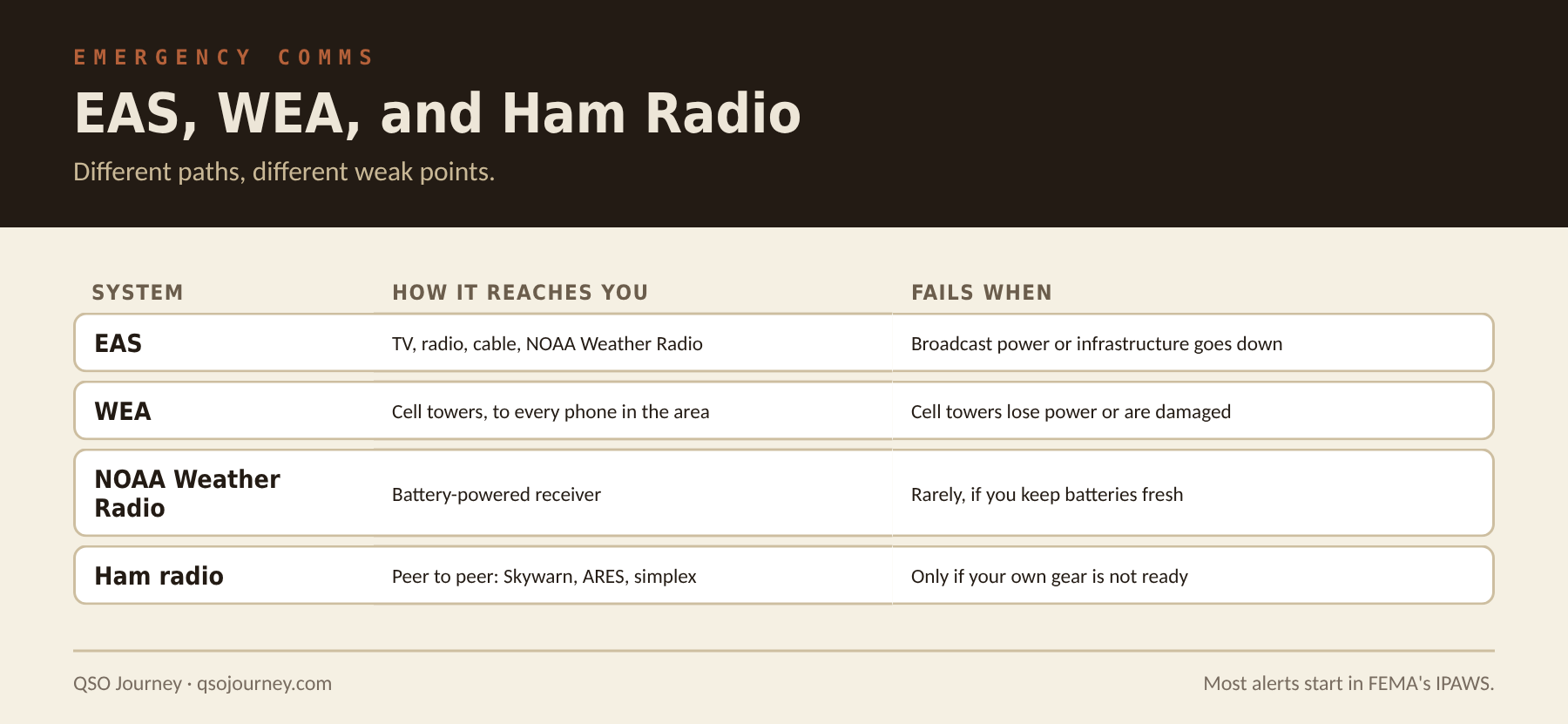
The Emergency Alert System pushes alerts through TV and radio broadcasters, cable systems, and NOAA Weather Radio, using that distinctive tone to trigger receivers to interrupt programming automatically. It is the oldest of these systems and depends entirely on broadcast infrastructure staying powered and operational.
WEA: Cell Tower Based Alerting
Wireless Emergency Alerts push directly to cell phones via cell towers, targeted geographically to phones physically in the alert area regardless of who they are registered to or what apps they have installed. It reaches people fast and broadly, but only works while cell infrastructure is up, which is exactly the scenario that often fails during the disasters these alerts warn about.
One Source, Several Paths
Most official alerts start in the same place: FEMA’s Integrated Public Alert and Warning System (IPAWS), which lets authorized alerting authorities send one message out over EAS, WEA, NOAA Weather Radio, and internet feeds at once. When one path is down, another may still get through, and ham radio is the path that does not depend on any of them.
Where Ham Radio Actually Fits
Ham radio is not a replacement for either system, it is the layer that keeps working when both of them go down. NOAA Weather Radio, one EAS component, has its own battery-powered receivers that stay useful independent of cell and broadcast power. Skywarn nets and ham EmComm networks exist precisely to relay warning information peer to peer when the broadcast and cellular infrastructure that EAS and WEA depend on is degraded or offline, filling the gap rather than duplicating what already works.
For what that layer looks like in practice, see Why HF Radio Matters Most When the Grid Goes Down, and for a century of real examples, Why Ham Radio Matters.