
Part of our Building Your First Ham Radio Station guide.
I picked up a Buddipole BuddiHex specifically for Field Day 2026, and going in, my expectations were already high. The BuddiHex has a reputation in the portable antenna world, and I wanted to see if it actually lived up to it. It did. It exceeded it. But it also taught me exactly why this isn’t going to be my everyday antenna going forward.

What the BuddiHex actually is
- Six-band hex beam covering 20m, 17m, 15m, 12m, 10m, and 6m, with pre-tuned wire elements for each band, no trimming or adjustment needed
- Total weight around 9.5 lbs with all band wires attached, genuinely one of the lightest hex beams available commercially
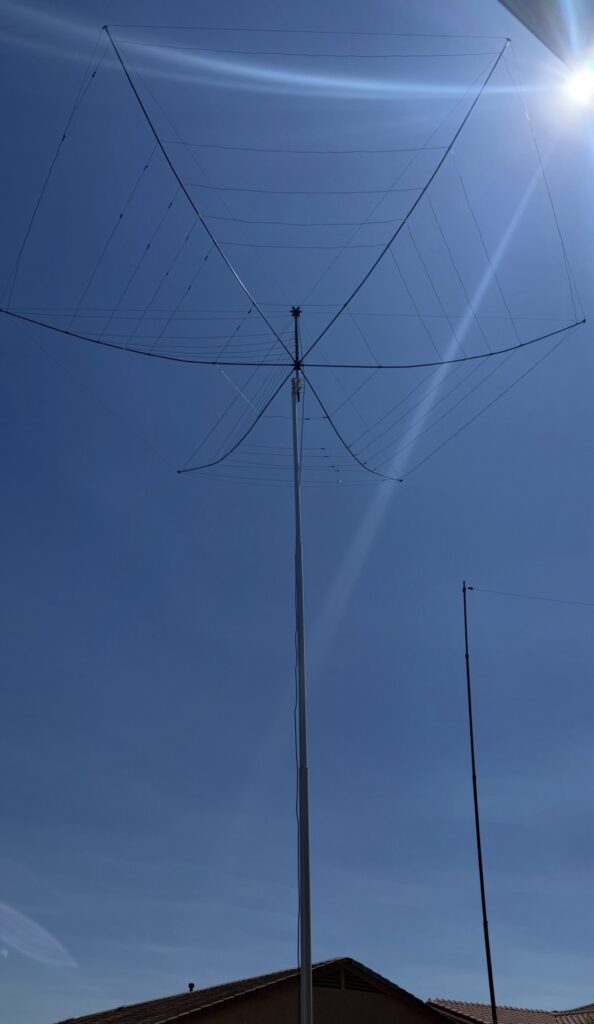
- Turning radius of only about 10 ft, dramatically smaller than a comparable Yagi while still delivering performance similar to a two-element horizontal Yagi
- 1.5 kW power handling
- Comes with support cords, tensioners, figure-8 line winders for wire storage, a BNC feedpoint, and a padded carrying bag with shoulder strap
- Color-coded arms and a central hub design that make assembly straightforward and repeatable
Notably, there’s no 40m option. Buddipole made the call that a 40m element on a hex beam this size would push the dimensions past what’s reasonable for a portable design, and after seeing how big it already gets on 20m through 6m, that tradeoff makes complete sense.
Setup: easy, with one catch
Assembly was genuinely easy. The arms plug into the central hub, the tension ropes and spreaders come together intuitively thanks to the color coding, and the wire elements clip on without any guesswork about which wire goes where. From unpacking to having it in the air took a fraction of the time I expected for something this substantial.
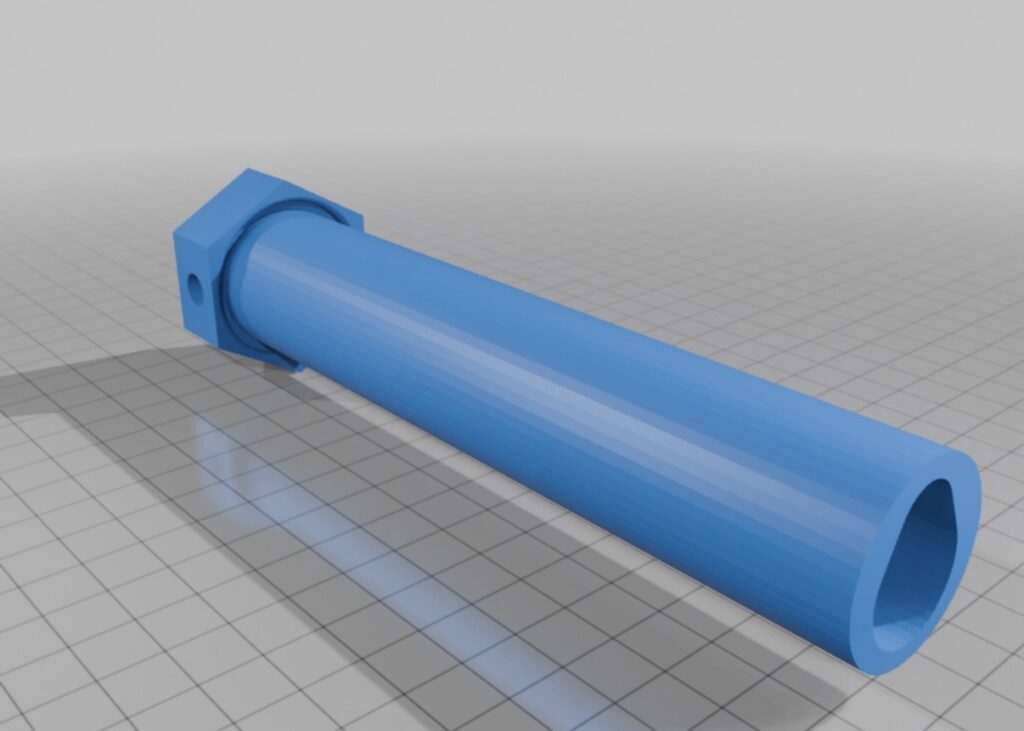
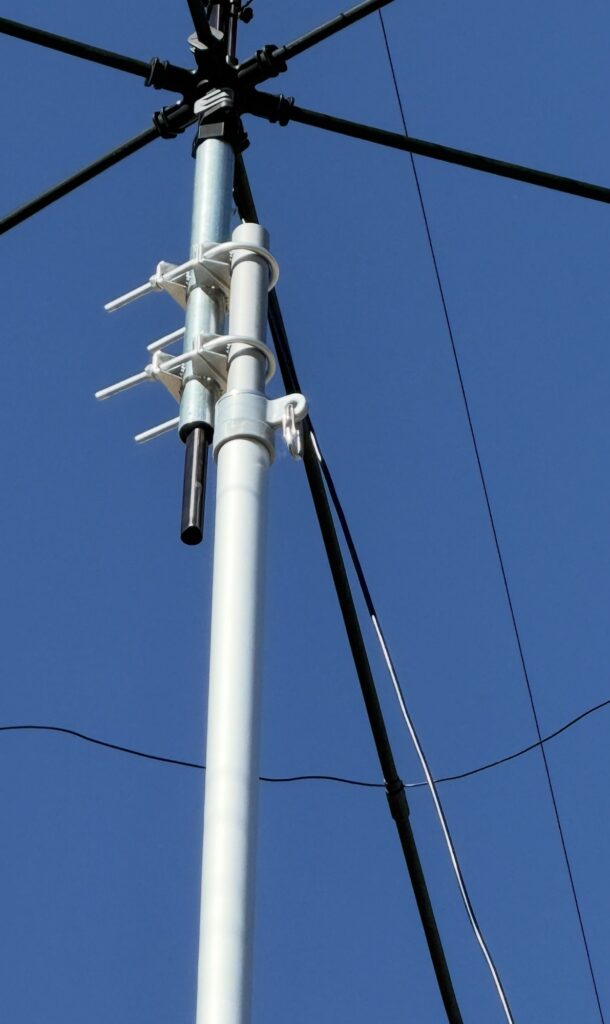
The one hiccup: Buddipole designs the BuddiHex around their own Mastwerks mast system, and I wanted to run mine on my 25 ft Chameleon Porta Mast instead. The mounting collar on the BuddiHex hub isn’t a drop-in fit for a Chameleon mast tip, so I ended up designing and 3D printing my own adapter to mate the two. It worked perfectly once I had it, but it’s worth knowing going in: if you’re not running Buddipole’s own mast, budget some time (or a 3D printer) for a mount adapter rather than assuming it’ll be plug and play.
I found this 3d print that allowed me to put the “A beam” in it, and then put this inside a piece of metal conduit.
https://www.thingiverse.com/thing:7367383
Performance: it exceeded my (already high) expectations
This is where the BuddiHex earned its reputation. Once it was up and I started making contacts for Field Day, the difference over a wire antenna was immediately obvious, better signal reports, easier pileup breaks, and the directionality actually mattered in a way I could feel contact to contact. For a beam with a 10 ft turning radius, getting performance in the neighborhood of a real two-element Yagi is genuinely impressive, and it held up exactly the way the spec sheet promised across every band I used it on.
The catch: it’s HUGE
Here’s the honest part. Even with a 10 ft turning radius being small for a beam, that’s still a lot of antenna to haul, assemble, guy out, and break back down compared to a wire or a vertical. It’s not something I’m going to throw up for a casual POTA activation or a Tuesday night ragchew. Between the size of the footprint once it’s deployed, the mast height it wants to really perform, and the sheer amount of gear involved compared to a simple end-fed wire, this is a production, not a quick setup, even though the assembly itself is genuinely well designed.
Where it lands in my rotation
Going forward, this is going to be my special-event antenna: Field Day, a dedicated DXpedition-style outing, or any time I know ahead of time that I want to commit the time and space to a real directional beam. It’s not replacing my everyday wire antennas for regular operating, and honestly, it was never going to. But for the one or two events a year where performance is the whole point, the BuddiHex more than earned its spot in the gear closet, and I’d make the same purchase again without hesitation.