
Part of our Mesh Networking guide.
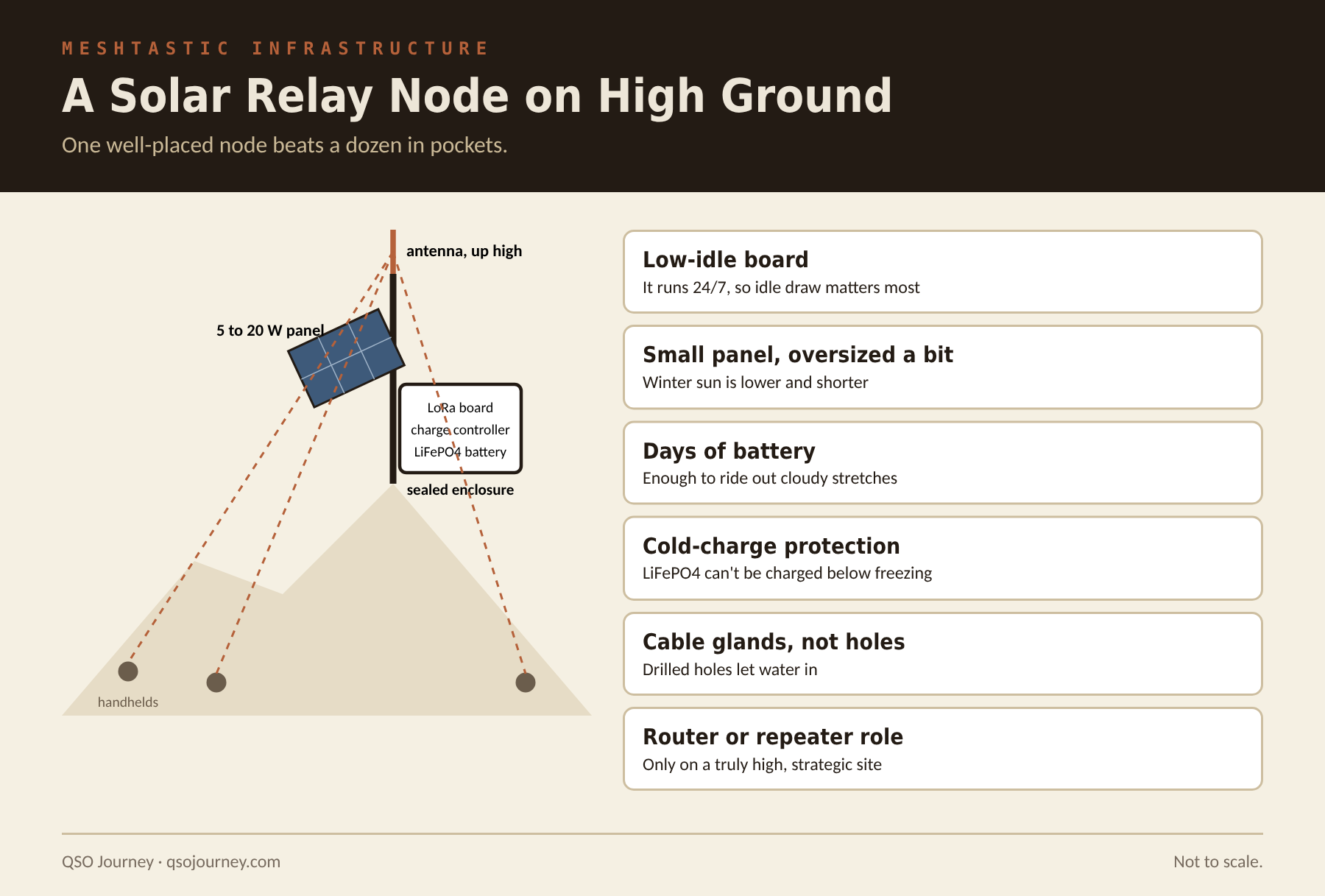
A Meshtastic network lives or dies on node placement. One well-sited, always-on relay node on high ground will do more for your coverage than a dozen handheld nodes in people’s pockets. Building a solar-powered repeater node is a weekend project that pays off every day after.
Core components
- A LoRa node board, ideally one with low idle power draw since it’ll run continuously
- A small solar panel, 5 to 20 watts is typically plenty for a low-duty-cycle relay node
- A charge controller sized for the panel and battery
- A LiFePO4 battery for long cycle life and safety, see LiFePO4 vs. SLA for the comparison. Cold is LiFePO4’s weak spot, not its strength: it can’t be safely charged below freezing, so where winters freeze, use a pack or charge controller with low-temperature charge cutoff
- A weatherproof enclosure rated for outdoor exposure
Sizing the solar and battery
Meshtastic nodes have a low average power draw since they’re mostly listening and only transmitting briefly. A modest panel, even 5 to 10 watts, combined with a battery sized for a few days of cloudy-weather autonomy, is usually enough. Oversizing the panel slightly is cheap insurance against winter’s shorter days and lower sun angle.
Weatherproofing and mounting
Use a sealed enclosure rated for outdoor use, with cable glands for the antenna and solar leads rather than drilled holes that will let water in over time. Mount the antenna as high and clear of obstructions as your site allows, since node placement height matters more for range than almost any other single factor. A tree, a fence post, or the side of a shed all work, higher and clearer is simply better.
Configuring it as a dedicated relay
Once installed, configure the node’s role as a router or repeater rather than a standard client, depending on what your firmware version supports. This tells the node to prioritize relaying traffic efficiently rather than behaving like a personal messaging device. Set a sensible hop limit for your network size, covered in more depth in Meshtastic Channel Configuration.
Be honest about the site before you pick a router role. The Meshtastic project’s own guidance is that router and repeater roles belong on nodes with a genuinely commanding position, like a hilltop or tall tower. A “router” in a backyard rebroadcasts aggressively without reaching anyone new, which adds congestion for the whole mesh. If your node is only a little higher than the houses around it, leave it as a client and let the firmware’s normal rebroadcasting do the work.
Where this fits in a bigger plan
A solar relay node is a good example of infrastructure you build before you need it, not during an emergency. For how mesh fits into a realistic household or community preparedness plan without overselling what it can do, see my Emergency Communications and Preparedness pillar page.